By Hiro Yoshida
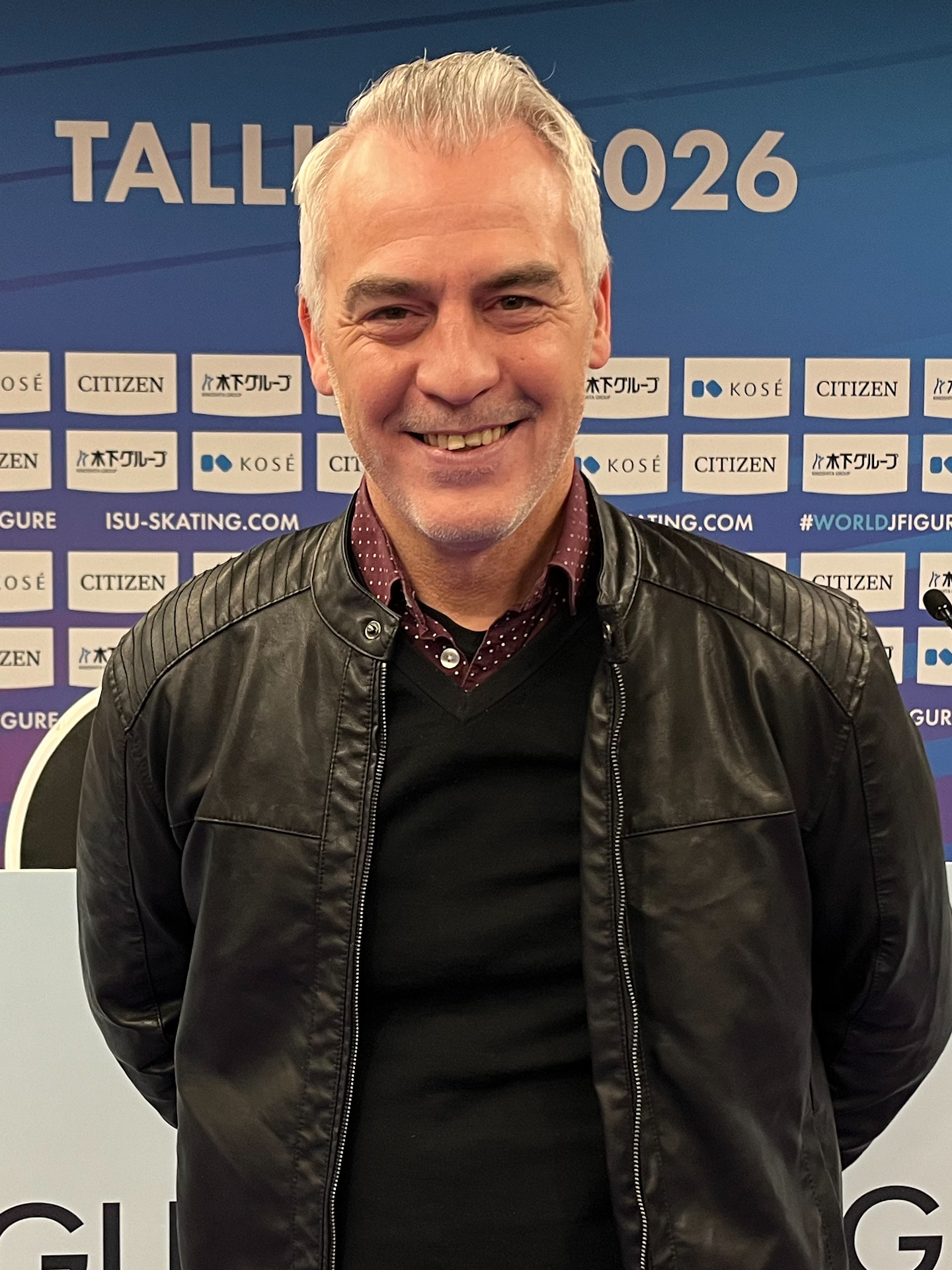
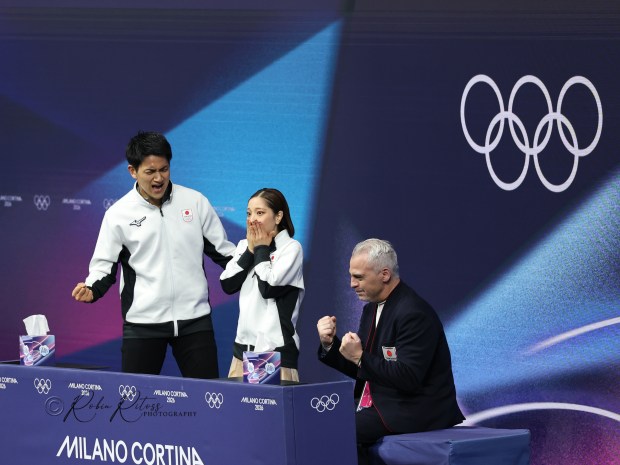
As the guiding hand behind Riku Miura and Ryuichi Kihara, Bruno Marcotte reached the pinnacle of his coaching career when his charges staged a comeback for the ages at this year’s Milano Cortina Olympic Games walking away with Japan’s first title in the pairs event.
The Japanese worked with Marcotte since they first teamed up in 2019. From then on, their destiny was settled and their journey took them all the way to that golden moment on 16 February in Milan. Along the way they won two World titles which marked them as firm medal contenders and this season in particular was calculated to enable them to perform to their potential at the Olympics.
“The biggest thing this year about the focus and planning was that everything we did all season long was in order to get ourselves ready for the Games,” Marcotte said. “Even when they did not do the long at Nationals, it was the right thing to be ready for the Games. We did two Challenger Series events to make sure we had enough points to skate in the last warm-up of the Olympics. Everything was strategised for the Olympic Games.”
Competing in both the team and individual events in Milan also required a methodical approach to ensure Miura and Kihara peaked at the right time.
“I’m lucky because I’ve lived it a couple times,” Marcotte said. “I lived it with Eric (Radford) and Meagan (Duhamel), with Riku and Ryuichi in Beijing and this year. Obviously, every time it was different. Eric and Meagan in Pyeongchang, they were the first event, so they had one day off, and they had to compete again. In Beijing, we had a week and a half, so we had more time. To me the timeline this time was perfect. We went back to Varese (the Japanese team’s holding camp location) after the team event. We took three days off. Zero skating, a bit of conditioning, and then we came back to Milan and started training. We planned this a long time before going to Milan, which practice we were going to do, which days we’re going to take off. The main thing was to see it as two different competitions. It’s like you go to one senior Grand Prix. You do your thing. You come home. You get to rebuild and peak again, but you have to let everything go down. That’s the approach we had.
“We calculated the exact same number of days that we would usually train, the same number of programmes we would usually train in between.”
Miura and Kihara got off to a superb start in Milan posting new personal best scores and winning both their segments of the team events to help Japan to secure a silver medal for the second consecutive Olympics. Just over a week later, they returned to compete in their individual event short programme when midway through their routine they had to abort a Group 5 Axel lift. The costly mistake put them down in fifth place going into the free skating almost seven points off first place.
Marcotte did his best to try and get Miura and Kihara to put to one side what happened and not let it affect their free skating performance the following day.
“I know the technical reason (for the error), but to be honest, when it did happen, it was surreal,” Marcotte said. “You’re in the moment. After that, I kept looking at and I was more focused on the tech box on the main screen than their performance. When I saw the tech box score, I thought we’re going to be okay. Not ideal, but we’re still alive. It’s not over. We can do it.
“I remember Ryuichi said, ‘What happened? I need to understand.’ I told him, ‘No, you don’t need to understand. There’s nothing to understand. It happened. You don’t do this lift tomorrow. You must put this behind you because every little thought or energy that you will put on trying to understand something that cannot be changed is energy that you will not have to compete for tomorrow.”
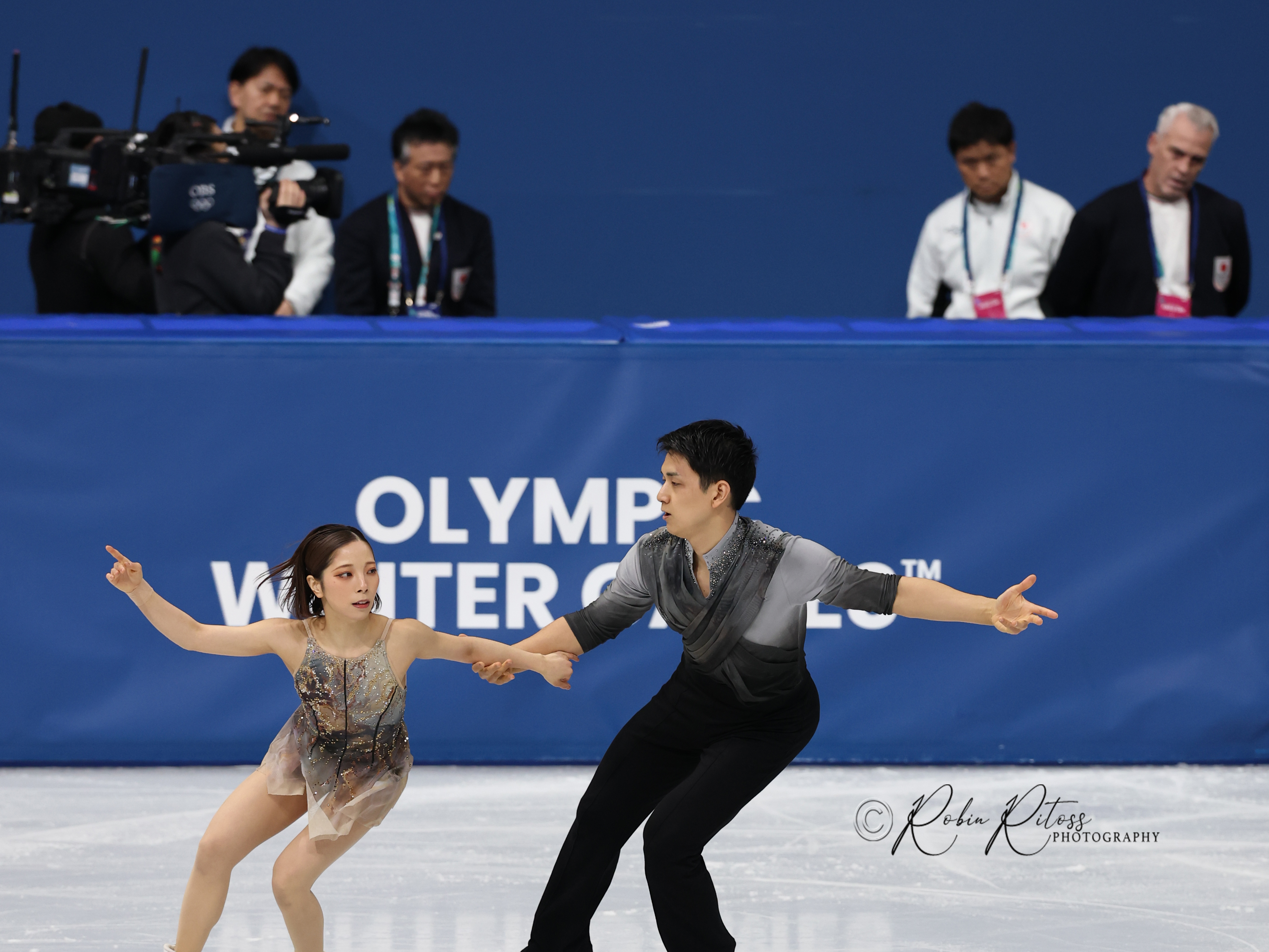
Crunching the numbers, Marcotte knew that there was more than enough potential for Miura and Kihara to overtake the pairs ahead of them given how the Japanese had been scored during the season. There was even a recent precedent in Olympic pairs that showed them a path to victory was still open. Marcotte did his utmost to give his students the belief that they could do it.
“All season long when I would look at our scores with our little mistakes, I told them, ‘They want to give you in the 150s.’ How high I did not know. But I said, ‘When you put it together at the Olympics, you’ll be in the 150s.’ Of course, when you score 155 in the team event, then it gives you the confidence that seven points behind, we can overcome it.
“That night, I was trying to make them understand that it was not over. I showed them a screenshot of Aljona (Savchenko) and Bruno (Massot), who were trailing by seven points in Pyeongchang and came back. It’s been done before. It could be done again. They had the training and long programme to be able to come back. To make them understand that the numbers were in their favour.”
Emotions were still running high for Kihara in particular, but as the following evening’s free skating got closer Marcotte saw things gradually click into place and he was confident that Miura and Kihara would skate well.
“From what I was told, Ryuichi was upset, but then he felt better,” Marcotte said. “He woke up the next morning, not feeling so good. We talked a little bit. I think that my biggest message was I wanted him to have no regrets in 10 years, 20 years. To have no regrets, you have to fight till the end, because at the end of the day the moment is what you remember. My biggest message to them was today be the best in the world. Practice was okay. Not the best, not the worst. We talked a little bit after. Then he went for a nap because we didn’t have enough time to go back to the village. They had brought kind of a blanket to go and lay down. I said, ‘Go for your nap and I’ll see you in two hours.’ When he walked back, he was focused and confident. I said, ‘Alright, they’re going to be good tonight.’ I knew.”
Miura and Kihara skated their “Gladiator” routine flawlessly to score a new world record free score and claim Japan’s first Olympic pairs medal and title. Marcotte believes the resilience forged through the course of their partnership, the support they have given each other and the struggles they have conquered were key to their success in Milan.
“When Ryuichi had his back injury two years ago, Riku supported him a lot,” Marcotte said. “It’s something that I have witnessed in the past, not so much in competition, but more in the training. When you go to a competition, if something bad happens, the worse the challenge, the greater the victory. When it happened in Milan, Ryuichi was hard on himself. But the key is there’s two people. You could really see their chemistry, their strong partnership because he didn’t try to bring her down. She was able to bring him back, allow him to bring himself back to her confidence. I think this is what makes them so special. It’s the difference between somebody who can win the Olympics and somebody who doesn’t. It’s to have the trust with each other, That’s how they train every day. So was I happy? Yes. Was I proud? Yes. Was I surprised? No.”
Their victory in Milan propelled Miura and Kihara into the spotlight in their homeland and earned their discipline a new found appreciation among the Japanese public that Marcotte views as a boon for the further development of pairs.
“I’m not a social media guy, but I like to follow,” Marcotte said. “I was watching the reels and it was so amazing to see people making videos. Adults with their kids doing the last lift of their programme. So many videos about them. They did deserve it and I am very happy for them. I really hope that they can maximise these opportunities and inspire a younger generation of Japanese skaters to want to do pairs.”
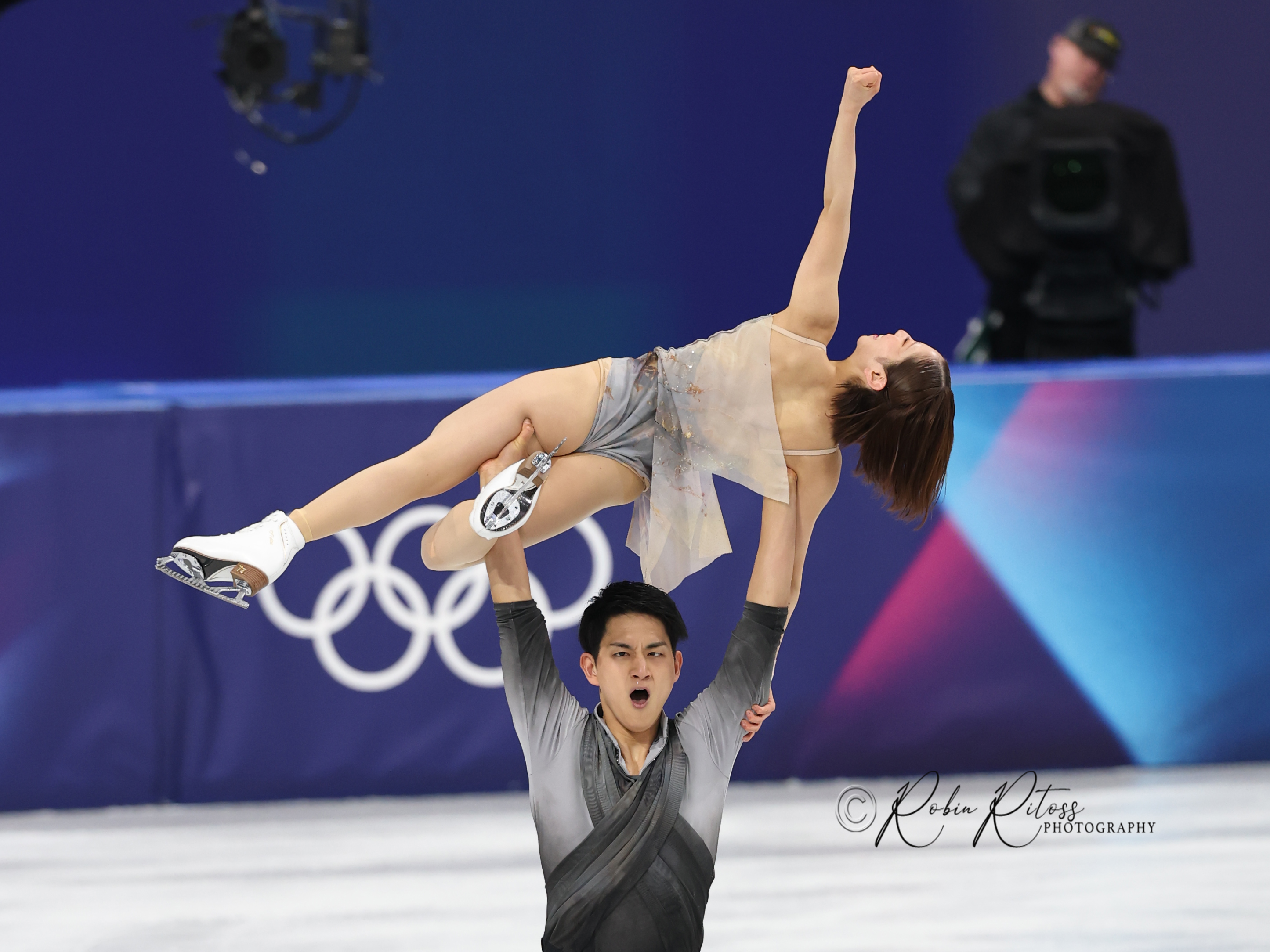
In April, Miura and Kihara announced their retirement from competitive skating. Marcotte feels privileged to have been their coach from their genesis right to the very end of their career together.
“I loved every second and I would not do anything differently,” Marcotte said. “The win is great, but it’s the journey that was amazing. We grew together. It was very special because it was from the beginning.”
The same year Miura and Kihara teamed up Marcotte moved from his hometown of Montreal to Oakville, Ontario to coach at Skate Oakville Skating Club which is where their collaboration began.
“I think I was looking for that challenge,” Marcotte said about the move. “I had amazing mentors from the day I started coaching. I had amazing mentors as coaches too, so I tried to use everything I’ve learned through the people I work for since I started to coach and all the coaches I took from and do it my way, use the good and do my own version of it.”
While he did not envisage quite how successful his new students would become, he quickly realised that they possessed enormous potential.
“I knew before they got together that Riku was going to be the next girl to be the next Olympian from Japan,” Marcotte said. “I always felt that Ryuichi was extremely talented, but was never in a position to maximise what he could do. When they first started, I had a vision of what I wanted them to look like. I quickly noticed they could be really good. He was grateful to skate with her, and that made the entire difference. When you skate with somebody who is grateful for you, you’re confident. You become strong right there. Even as a coach, you want to work twice as hard for them.”
The coach and his skaters got to work on establishing their unique selling point that would distinguish them from the leading pairs.
“I knew we would never have the same lines as the Russian skaters,” Marcotte said. “They’re tall. They have the ballet background. So I said, ‘What can we have that nobody else has?’ With Eric and Meagan, what allowed them to be good were the side by side triple Lutz and the throw quad. It made them special. I said, ‘What can we do so that we are special?’ I quickly thought speed. We’re going to make sure we are the fastest team in the world. When we go out to compete, we’re going to fly by the Russians. That was the strategy and then their relationship, their personality. We tried to really promote that, and it kind of worked. By the time we got to 2022, I knew that we were going to be special. Olympic champions I did not know, but I knew back then we could become World champions.”
After taking silver at the 2022 World Championships, Miura and Kihara cleaned up the following season culminating in victory at 2023 Worlds in Saitama, Japan. The following season proved challenging for them, but Marcotte believes the problems they experienced in that 2023-2024 season were what helped them to further develop as a pair.
“When they won in Saitama, coming back was difficult for many reasons,” Marcotte said. “The expectations changed and now were higher. You try to repeat. We didn’t have the right music or the right programme that year. Everything was difficult. Then Ryuichi had his back injury. It was a miracle for them to get back together from Four Continents to Worlds and being second. We won the long at Worlds. I think we should have won that year. I remember after the season, they said, ‘That was so silly. Our off season was terrible.’ I said, ‘No, it’s okay. You needed to experience that. You needed it. You needed to let go. You need to learn from that it’s okay. Never regret that because that experience will help you being stronger.’ It was hard, but the end of the year finished strong. They really learned how to deal with expectation and deal with more media attention, dealing with tours, with the schedule, what to do, what not to do, and after that the season things went really well.”
Miura and Kihara regained their World title in 2025 and went into the Olympic season comfortable in the position of strong contenders for Olympic gold.
“I remember a lot of media asked me, ‘Do you feel it’s going to add pressure being defending World Champions going to the Olympics?’ I said, ‘No, because now we figured out our way. I said, ‘They’re not defending Olympic champions. World champions, but we were seventh at the Olympics. We are not reigning Olympic champions.’”
The banishment of Russian skaters following Russia’s invasion of Ukraine in 2022 had a significant effect on the sport and particularly in pairs where Russia had long been a powerhouse. However, Marcotte believes that the result in Milan would have been the same with or without the presence of Russian pairs.
“Nobody could have touched them, not with that long,” he said. “I’m so happy they skated that well. I’m surprised nobody asked me at the Olympics that question. Nobody. I was surprised because I was waiting for it. A lot of Japanese media came to Oakville a year ago during the off season and they asked me how do you think Riku and Ryuichi would fare if the Russians were there? They’re good. They’re really good. We just have different qualities. We have different strengths. I wish we could have competed against them, but to me the way they skated, there’s no doubt. It’s not to take anything away from Boikova/Kozslovskii. They’re good, but compared to us, they’re slow. Their lifts are not as good as ours. We have different strengths and it’s the quality of Riku and Ryuichi. To really appreciate them you have to watch them in person. Even on TV you can really appreciate how much faster and how much attack they have compared to other teams.”
Marcotte believes the role of a coach is to nurture his skaters so that they can use the talent they have to achieve their goals in skating.
“Everybody’s different, but what you want is for them to maximise what they can do,” Marcotte said. “Obviously, for Riku and Ryuichi to win the Olympics, it’s the ultimate of helping them maximise what they could do and what they dream to get. I’m just so happy for them, and I feel extremely privileged that I was part of that. I truly think Riku and Ryuichi were the perfect students for me, and I was the perfect coach for them. We had what we needed. We had the personality, the vision. You can have an amazing coach and amazing skaters, but sometimes it’s not what they need. I often use The Rolling Stones as an example. Mick Jagger is not the best singer. Keith Richards is not the best guitar player. I’m not saying we’re not the best, but what I mean is what’s more important is what can you create as a group. What can you create as a team. For us, we were able to create this as a team and with everyone else that helped along the way, of course.”
Although Miura and Kihara have stepped away from competition, Marcotte is keen to maintain his relationship with them in order for pairs skating in Japan to grow and flourish into the future.
“One thing is for sure, I would love to develop another Japanese pair team,” he said. “Japan has the talent. Japan has the mindset. The only thing that Japan needs is more pair coaches so younger kids don’t have to learn pairs in Canada, US, Russia, or wherever.
“If one day Riku and Ryuichi wants to coach that would definitely help to continue the tradition. If I can be involved in any way, of course I will.”
Whatever they do, Marcotte is certain that Miura and Kihara have forever left their own unique mark on figure skating
“I think they changed the sport in their own way.”
(A version of this article features in the Japanese magazine “Figure Skate Life: Volume 38”)