By Hiro Yoshida
The past twelve months have been perhaps the most challenging of Loena Hendrickx’s career. After overcoming injury, rehabilitation, illness and the small matter of having to earn her spot at this month’s Olympics, the Belgian skater is ready to leave it all out on the ice in Milan this week.
The road to try to get to a third Olympics began on 21 February 2025 when Hendrickx had ankle surgery. After two weeks in a cast, she then wore a brace and a few weeks later started the long process of rehabilitation off ice.
“I went to the physio three times a week and then had my first bike ride,” she explained. “I didn’t really put a lot of pressure on my ankle with cycling so that was a perfect. I was biking a lot with my dog on my bed.”
Her recovery progressed ahead of schedule and she was able to get back on the ice earlier than expected. However, she could only handle short sessions of doing simple moves which was something that frustrated her.
“We had a plan made up and they said that I would skate the second or the third week of May,” Hendrickx said. “But then my physio suggested to start a little earlier if possible to just get used to the ice for five minutes and then try to do five minutes every day. The first day, I was just doing slowly. I wasn’t following any exercises from Jorik, just feeling myself and that was going fine. The next day, I tried it again and then it was like 10 minutes, 15 minutes. I was already doing the exercises, but it was including three turns, rockers, counters. After I felt like it wasn’t a good idea because it really forced everything. I really had a lot of pain, so I couldn’t go on the ice the next days. On the Friday, we tried it again, first slowly, straight lines. It was boring. So boring. I said, ‘What am I doing here?’ But I think it was good. It wasn’t fun. I didn’t go to the ice rink with a smile because I wasn’t satisfied with just straight lines. Then day by day I added first edges, and then a three turn, then a rocker, a counter. I had to rebuild very slowly. I think that lasted for three weeks. If I could skate the edges properly, then everything went pretty fast. The rehab with the physio was very intense and we did a lot of jumps and ankle stability. Then we started to do little rotations. We started very slowly, just a quarter, then a half. We really took our time. I have the best team, and they supported me super well. I’m the kind of person who wants to go faster than my body wants to, so it was good that we really had a strict schedule.”
This was not her first time dealing with an ankle injury and she was determined to be careful so that her training could be as free of interruptions as possible as she moved along the path to full fitness.
“In 2019, I twisted my ankle and that’s when the big injury happened,” Hendrickx said. “I fractured my ankle and the ligaments were torn and ripped apart. Every time I tried triples, I didn’t have a good take off and it was under rotated. I was back off the ice for two weeks because I hurt it again. I didn’t want to take the risk. I think the first two or three weeks I only jumped triples in a harness so that the guy lifted me longer so I could have a very slow landing and I think that was very good.”
While her recovery was going well, she suffered some highs and lows last summer with the added pressure of the clock ticking in the background in order for her to be ready for the final Olympic qualifying competition in Beijing, China. She made the decision that less would be more as she fine-tuned her preparations for the event.
“When I did my first triples alone, it felt amazing,” Hendrickx said. “Then I really had a dark moment. Everything was going well, but I had to rebuild my programmes. We also had a summer camp, so I was doing all the hours there. It was just too much for me. My body was very exhausted. I was also doing extra personal training, cycling, running. It was just too much. We decided to skip a few sessions of the camp so I could have more quality time on ice with fewer training hours. That’s when I really saw myself getting better. The programmes were easier to run through and everything went well. That was a month before China. I really had one month of good trainings, run throughs every day. I felt really ready for China. At that moment, I thought it was going to be easy and I have to make it.”
At the ISU Skate to Milano Figure Skating Qualifier, Hendrickx finished third in both segments to win a bronze medal behind Individual Neutral Athlete Adeliia Petrosian and Georgia’s Anastasiia Gubanova to earn Belgium an extra quota place in the 2026 Olympics women’s event. The sense of achievement this time round was unique compared to her two previous Olympic qualifications.
“It was a different feeling because I’ve never experienced a last chance,” she said. That was the first time I really felt it. It was now or never, but I think I was so well prepared. It was just an amazing feeling. It’s crazy because before the Olympics was just easy for me, qualifying and doing the Olympics. That’s it. It was now or never (in Beijing). I had to do it and I did it. That’s why I was very emotional and very proud of that.
“I think I’ve never worked so hard towards a goal like this. If the whole road to China wasn’t perfect, I wouldn’t have gotten my spot. I really think that my rehabilitation was perfect. The first time I went on the ice, I had a little pain. I had to take a day off, but it was not a big setback. We were very smart, listening to my body and not over training or trying more than we should. I think that’s thanks to my whole team.”
Back in March 2025 when she had been convalescing from her surgery, Hendrickx kept an eye on the results of the World Championships. Her compatriot Nina Pinzarrone finished seventh enabling Hendrickx to compete for a second spot for Belgium at the Beijing qualifier. Although she is happy that Belgium will have two entries in Milan, a part of Hendrickx believes that having only one spot may have been more optimal for her recovery and preparing for the Olympic season.
“If there was only one spot, we would have had to compete against each other at the two Grand Prix. We would have had two chances of being the best. Plus, the Grand Prix was much later, so I would have had more time for recovery than Beijing. But at the end it’s amazing now that there are two Belgian women at the Olympics in figure skating. That’s just crazy.”
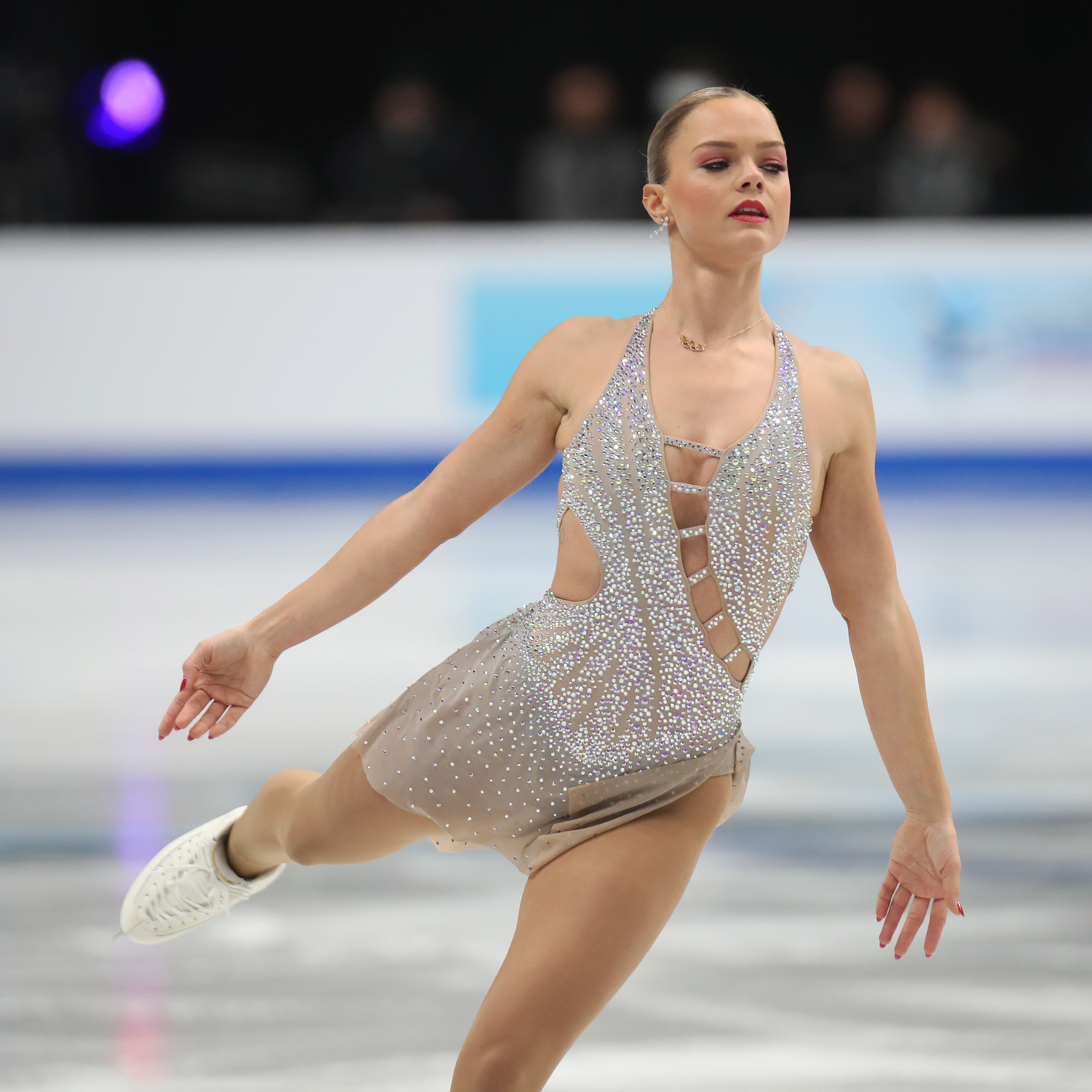
This season’s schedule presented challenges for Hendrickx who had to peak in September for the Olympic qualifier and then get herself ready again for her Grand Prix assignments in Japan and Finland. She found it tough physically.
“I was very tired already because Beijing was super early,” she said. “It was one and a half months until my first Grand Prix, then two weeks later to the other Grand Prix and I was already dead. My body was tired. If I was picked for the first Grand Prix or maybe a competition before then I could hold my form easier than for such a long time.”
At NHK Trophy, Hendrickx fell on a triple flip in the short programme which had her fourth after that segment. She rallied in the free skating to move up to third overall. With just two weeks between Grand Prix events, she found it hard to navigate the aftermath of competing and having to get ready to for another competition so shortly afterwards. She knew something was off.
“The first week it’s always hard for me after competition,” she explained. “I really have big lows after competition, but then I started feeling ill. I had some problems with my stomach. I always felt I was having cramps on the ice. I went to the doctor so many times. I tried a lot of medication, but nothing really worked.”
She travelled to Helsinki for Finlandia Trophy. After an error-ridden short, she made the decision to withdraw from the free so she could go back home and focus on getting back to full health.
“Normally I always can eat if I feel sick, but it was the first time I couldn’t eat. I also lost five kilos. At that time, I was pretty shredded for me and still I lost almost five kilos. I was very thin and I lost all my muscles after Finland. The first week we planned to rebuild the programmes, but I couldn’t rebuild them because I was still feeling too weak. I was starting to feel better again, but still the energy wasn’t there yet. The moment when I felt better, I got a cold. Then the energy level was again down. I had to reduce training and everything was super hard. I lost all the jumps.”
At the end of the year, she travelled with her brother and coach Jorik Hendrickx to Miami, Florida to try a different approach to training before the European Championships. She struggled initially.
“The first week was a disaster,” she recalled. “We had a lot of practices, hard practices. We were doing a lot of jumps. I’m not really used to doing it, but we wanted to try something different. We also didn’t have a lot of time before Europeans, so we really had to push through. It was very hard. One and a half weeks in Miami, I was crying because I didn’t see improvement. That was very frustrating.”
With encouragement from her brother, eventually she began to see a return to her previous form.
“He was calming me down. He said, ‘You really worked hard. Your body is tired. After the weekend, you will see you will rise.’ I trusted him. He told me to just trust the process and he was right. The last week in Miami, I was again happy on the ice and everything felt more effortless.”
With little time left until the start of Europeans, Hendrickx returned home briefly before making the journey to Sheffield. She faltered in the short at Europeans but came back strong in the free despite not feeling her best to take a silver medal.
“I had a pain in my groin before the free. I don’t know what I did at practice, but I had to go off the ice early because I couldn’t jump anymore because of the pain. After warming up for the free, it was so bad that I panicked a little because I had to be on the ice three minutes after that. I was very nervous. I also had a cold, so breathing was harder, plus the pain was there. If I just lifted my foot off the ground, it already hurt.
“Maybe it makes me stronger? If I know I have something, I have to fight through it and maybe it gets me good competitions. If you see the silver medal at (2022) Worlds, I was injured very badly. The gold medal from the short at (2024) Worlds in Canada, it was also with a big injury. I think maybe it’s something I also need and what makes me give.”
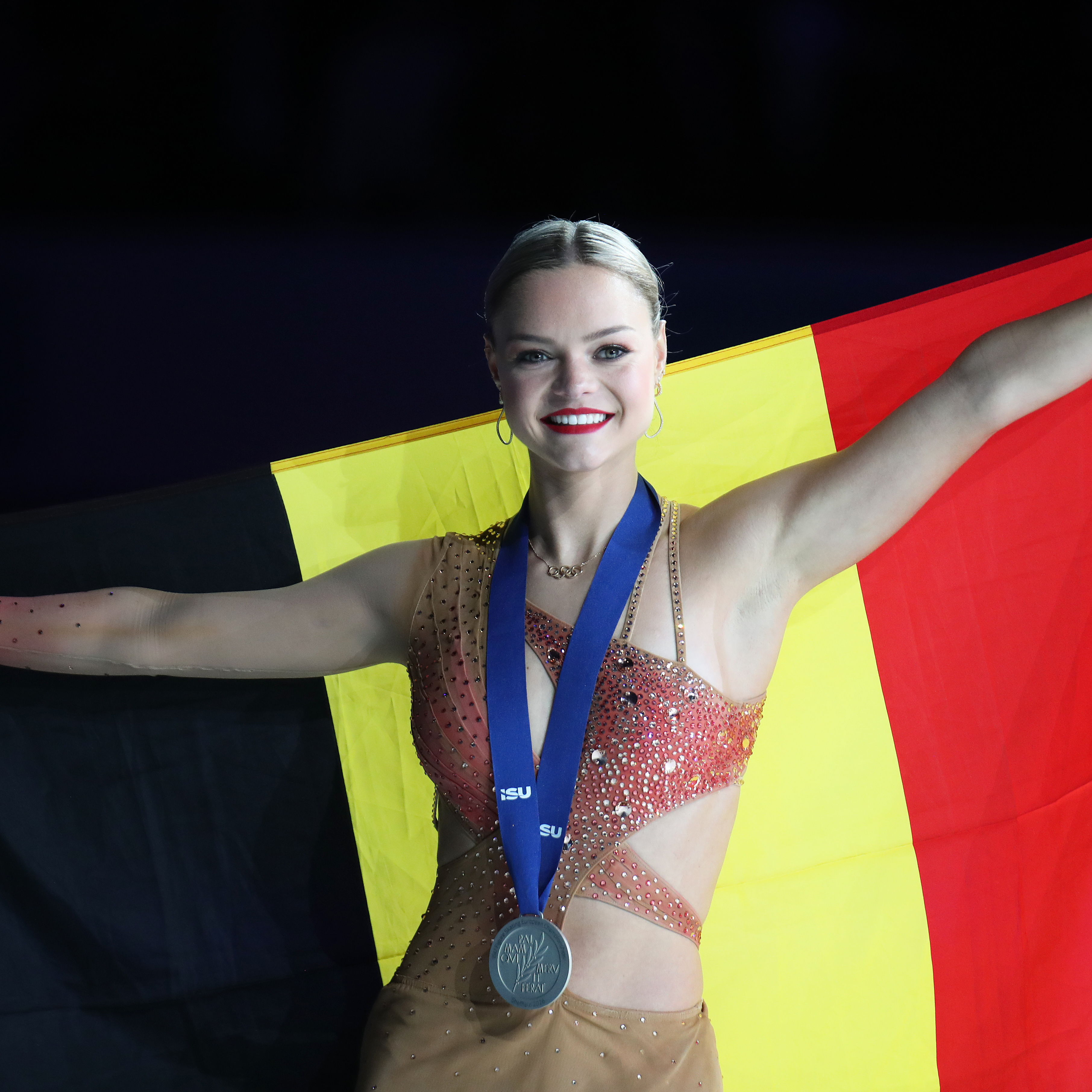
Hendrickx is looking forward to beginning her third Olympic campaign this evening in Milan at her peak.
“I’m very excited,” she said. “This was the last dream of my career that I wanted to fulfil, and it’s almost there. I’m going to be very careful, work hard and show what I can. Hopefully I have a better preparation, not being ill and feeling the best way possible there.
“I’m not going to attend the opening because I want to focus on good practices. At the Olympics, you only have two practices of half an hour. You cannot use your music whenever you want. I think it’s better to stay a little longer home because I experienced already two Olympics. When I arrive there around the 14th or something, I will enjoy every moment there. I don’t want to lock myself up in my room. I really want to experience everything. The first thing I’m going to do there is to go to the shop and buy merchandise.”
Compared to when Hendrickx embarked on her senior international career, she believes there are now better systems in place to nurture young Belgian skating talent in part due to the legacy she has left.
“I think it’s because of my results and it’s just an amazing feeling,” she said, “If you see the support they get now, it’s much bigger. I didn’t get any support until I made my qualification for the Olympics and then I got support. Now, they’re already supporting Nina, Denis (Krouglov) and Lilou (Remeysen) already for many years. Nina just qualified for the Olympics last season, but she already got money three years ago. That’s something I never got. I think it’s amazing to do this for the sport and to make it bigger in Belgium. In the first Europeans and Worlds I did, it was without media, without interviews from Belgium. For me, it changed a lot during my career and every competition felt different for me.”
This time four years ago Hendrickx did not imagine she would be going into her third Olympics as a European and World medallist. She also recognises that fortune played a part in how things turned out for her.
“I’m very proud of the career I got. I also know it’s a little weird because in the beginning I didn’t get medals. Then the Russian skaters fell out, so that gave me a lot of opportunities to be a medallist. I’m very proud of every achievement I made.”
She is still waiting to receive medals from 2022 Europeans for which she is now the rightful recipient due to the disqualification of Russia’s Kamila Valieva for doping.
“It’s ongoing for the medal part,” she said. “I will get the big bronze and a small gold for the short.”
While she will be concentrating on her performances this week in Milan, Hendrickx is also has her mind on what life will look like beyond competitive skating.
“The first thing I think I will do is go on a city trip with my boyfriend. We are also building a house together. I think the windows will come the first or the second week of February. After the Olympics, there will be a lot of work to do and a lot of choices to make for furniture and everything. That’s also something I really look forward to. It’s a new step in my life and it’s very exciting as well.”
 europeonice.com