By Maria Bagdasarova
(Featured Photo: © Asatur Yesayants / YantsImages )
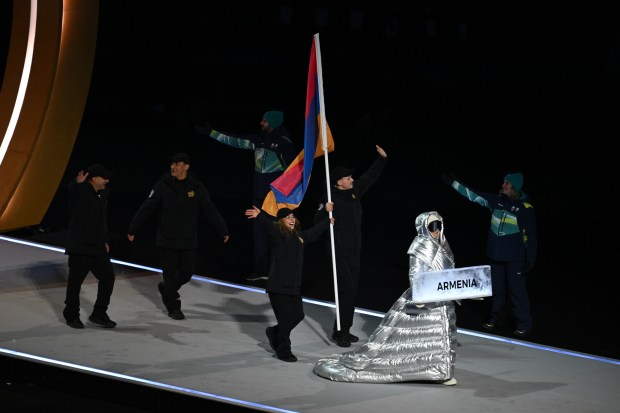
At the Milano Cortina Olympics, Karina Akopova and Nikita Rakhmanin are the first pair skaters to represent Armenia at the Games since 2002. The pair secured their Olympic quota at the ISU Skate to Milano qualifying competition in Beijing in September 2025, re-establishing themselves on the international stage after more than a three-year hiatus. The path to the moment when Karina Akopova and Nikita Rakhmanin finally sat in a kiss-and-cry with “Armenia” next to their names was far from straightforward. As they prepare to compete on the Olympic ice this weekend, they have a clear objective in mind: to represent Armenia with confidence and pride on the world’s biggest stage.
Akopova and Rakhmanin, who were already a couple off the ice, teamed up in 2020 while representing Russia. However, Akopova had been contemplating a switch to Armenia since the early stages of her pairs career. Although her last name does not hold a traditional Armenian –ian/yan ending, Akopova is Armenian on both sides of her family. Adopting Russian-style surnames (ending in -ov/-ova or -ev/-eva) was common for Armenians in Russia, Georgia and Azerbaijan as a result of intense Soviet-era russification and administrative pressure.
Akopova’s family history reads like a map of displacements that many post-Soviet Armenian families understand instantly. “My grandparents on my mother’s side lived in Azerbaijan,” she said. “Then when the war started in 1988, they moved to Mineralnye Vody in Russia.” Her mother later married her father and briefly moved to Moscow. After her parent’s divorce, the family relocated again. Akopova was born in Moscow, lived in Mineralnye Vody for some time, and then returned. In 2021, she and Rakhmanin moved to Sochi to train under the guidance of Dmitry Savin and 2014 Olympic silver medallist Fedor Klimov, in an environment that gradually developed into an international training hub.
The team’s coaches initially advised against the country switch, pointing to the depth and strength of the Russian pairs programme long regarded as one of the strongest in the world. Competing within Russia, they argued, would drive technical and competitive growth, whereas skating for a country without internal rivalry could risk stagnation.
The team came back to the idea of representing the country tied to Akopova’s heritage after her back injury, which seriously disrupted the pair’s career for a few years. The injury emerged during the 2021/22 season and steadily worsened. For months, doctors struggled to identify the cause. As the pain intensified to the point of triggering panic attacks, the team was forced to sit out many competitions. Akopova was finally diagnosed with inflammation of the piriformis muscle compressing the sciatic nerve, which even impaired the function of her right leg. While the physical recovery eventually followed, the psychological comeback proved far more demanding.
The team stopped competing inside Russia in November 2023 and initiated the process of switching federations. They had hoped to get their release in December 2024, allowing them to take part in Challenger events at the beginning of 2025, earn the required technical minimums for the World Championships, and potentially qualify for the Olympic Games there. However, events did not unfold as planned. Instead, the pair endured one of the longest “quarantine” periods (the waiting time required for eligibility changes) faced by any Russian-born skaters. Their requests were refused multiple times by the Russian Figure Skating Federation. “We sent letters from the Armenian side. We got refusals four or five times. We didn’t understand the reason. We were no longer on the Russian national team. We didn’t receive any funding. We had Armenian citizenship. I couldn’t understand why, as someone who is fully Armenian, I wasn’t given a chance to skate for my homeland,” Akopova recalled with frustration.
Like many Armenians in Russia, Akopova grew up without access to Armenian schools. Russian, over time, took over in the family. Not because Armenian wasn’t valued, but because the infrastructure to sustain it was not there. “At home we mostly speak Russian,” she admitted. Armenian still existed in flashes: phrases that don’t translate, the sound of grandparents talking, the music of it during family gatherings. Culture lived in food, in the way relatives always seemed to be visiting, in the loudness and warmth of Armenian hospitality. “Of course there was Armenian food,” she laughs. “Nikita can tell you. My grandmother is always telling him, ‘You haven’t tried something like this, try it.’”
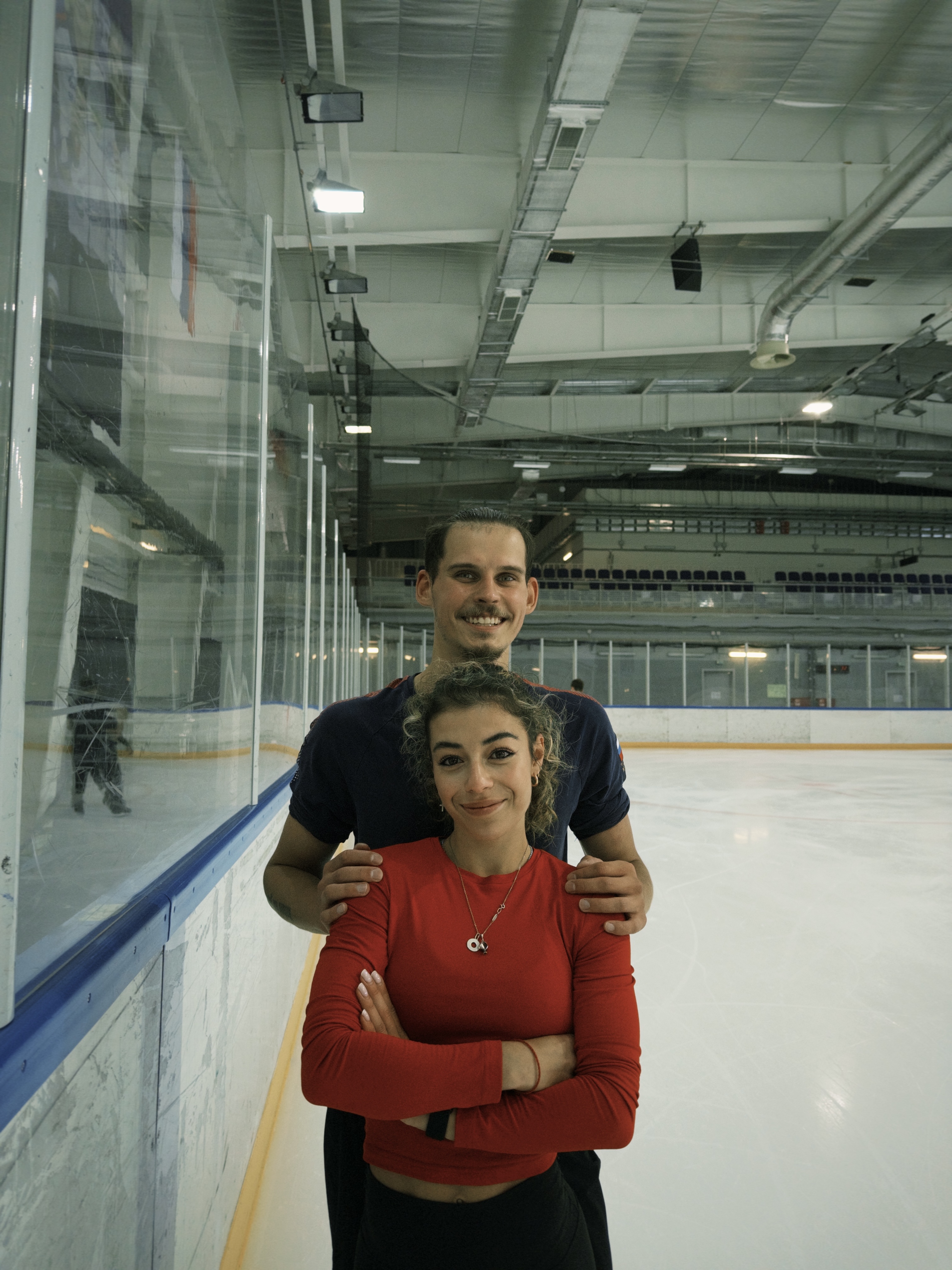
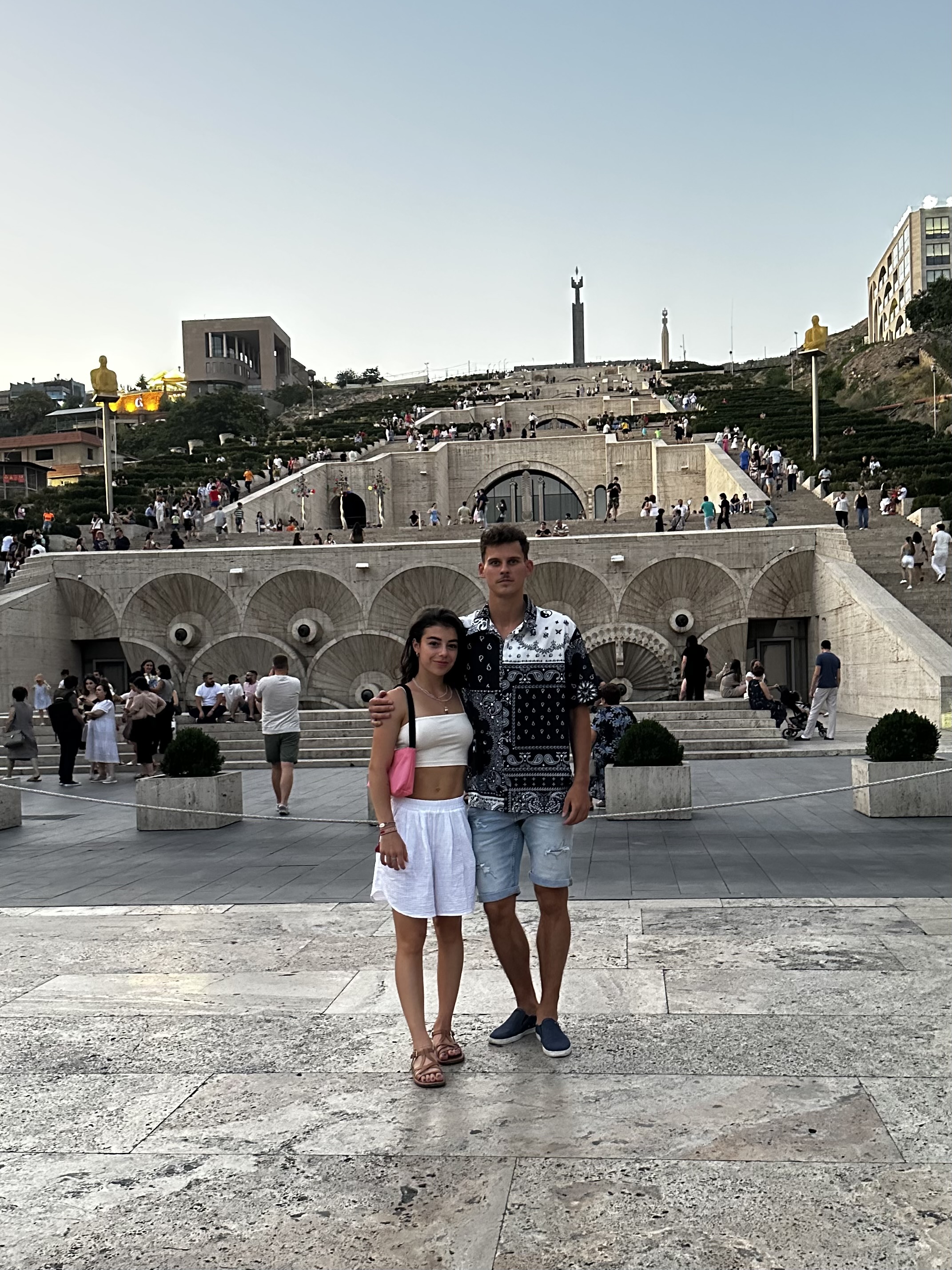
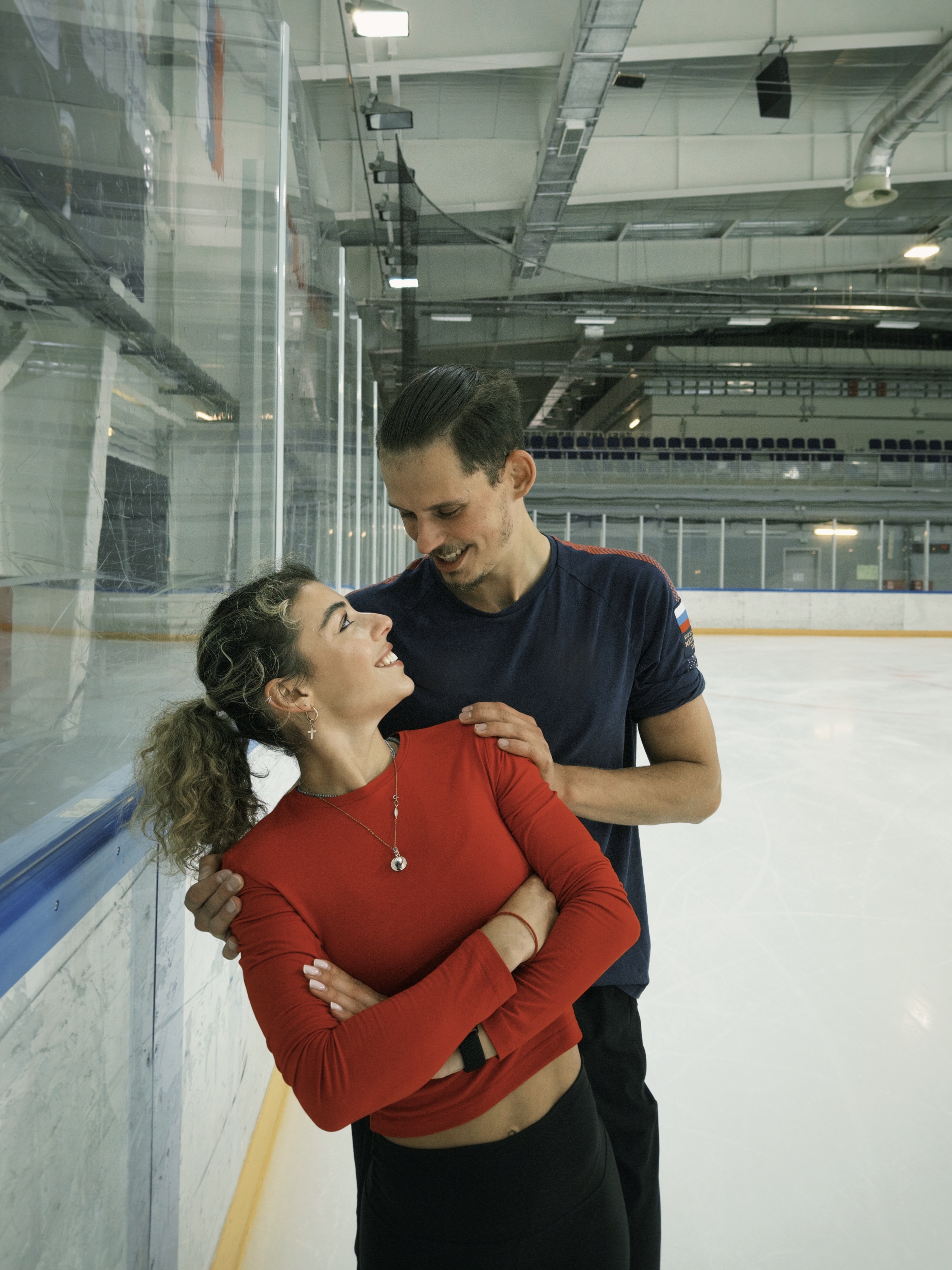
Akopova vividly recalls her first visit to Armenia. “When we landed and were driving into the city, I was in awe seeing all of Yerevan built from tuff stone. It was so beautiful,” she says. Widely used across the country and a defining feature of Armenian architecture, tuff is the dominant building stone of the Armenian capital, something Akopova had encountered long before without fully realizing it. “We used to go to the Armenian Cathedral in Moscow, and I always wondered why it was built from that stone. Only when I arrived did it all make sense,” she explains. Seeing Armenia firsthand transformed cultural references into lived experience, deepened by what she describes as the warmth and kindness of the people. For Rakhmanin, the connection formed just as naturally. He points to the country’s everyday appeal: the food, the compact scale of Yerevan, the pleasant climate, and the openness of the country’s people.
The final months before the federation switch approval were the toughest for the team. “It was very hard to see our training mates travel to competitions without us having this opportunity. We stopped practicing six days a week then, like we had done in the previous year. We had already made plans as if we wouldn’t be released. Shows, other options, anything,” Rakhmanin explains. When permission finally came through in May 2025, the emotion wasn’t joy. It was emptiness. “I had nothing left inside,” Akopova admits. “The situation ate me from within, all the emotions I had.”
The team had one last opportunity to qualify for the 2026 Winter Olympic Games at the ISU Skate to Milano qualifying competition in Beijing in September 2025. A clear awareness of what was at stake – the chance to fulfil a long-held childhood dream – helped them regroup and focus. To secure the quota, they needed to finish in the top three among 11 pairs, a challenging but achievable objective.
Akopova and Rakhmanin kept their free skating programme set to the “Slumdog Millionaire” score, drawing on themes and musical influences from Indian culture. At the same time, it was important for them to mark their debut under the Armenian flag with a distinctly Armenian choice. For the short programme, they selected “Artsakh” by Ara Gevorkian, an instrumental piece rooted in folk traditions, released on the composer’s 1999 album “Ani”. This composition was one Akopova had long hoped to skate to. “We had a few options for the short,” she said. One piece was suggested by their coaches, but Akopova refused to rush past “Artsakh”. “I said, ‘No, wait. I need to skate to “Artsakh” first.’ I had to insist,” she laughed. They worked with an Armenian choreographer to build the programme, and then fine-tuned details, particularly hand gestures and folk dance nuance, with a Moscow-based specialist in traditional dance, someone they had already worked with on their “Slumdog Millionaire” free skate.
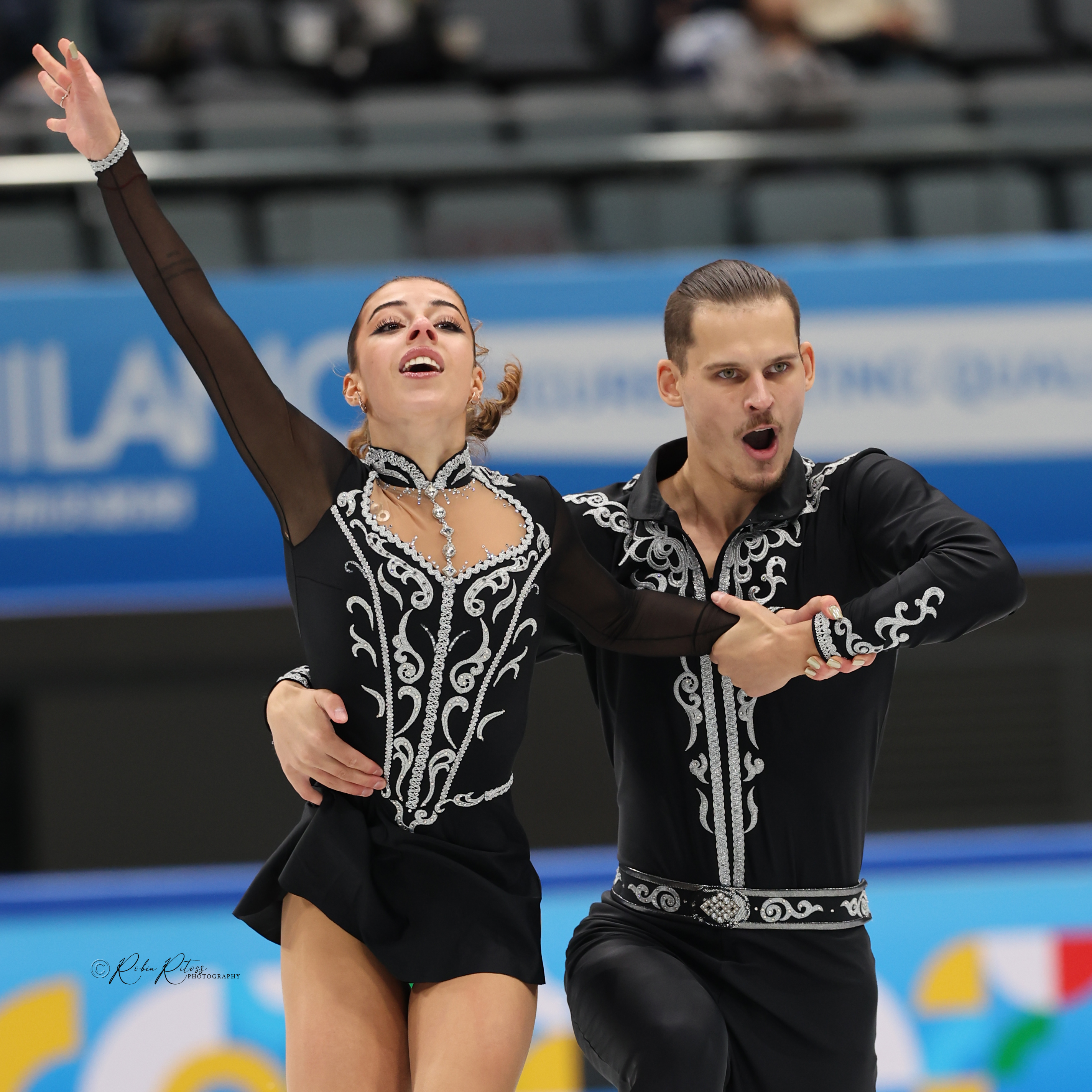
“Artsakh” is named after one of the 15 regions of ancient Greater Armenia, widely known as Nagorno-Karabakh, a territory long disputed between Armenia and Azerbaijan. At the start of the Milano Cortina Olympic Games, Azerbaijan’s National Olympic Committee claimed that the Armenian team’s use of this music implied a political message. As a result of this pressure, Akopova and Rakhmanin were made to remove the track title from the official listing, and the composition is now presented only in generic terms as “Music” by Ara Gevorkian.
Akopova and Rakhmanin were away from competition for nearly two years, and absent from the international circuit for three and a half. A few weeks before Beijing, they travelled to the United States to reacquaint themselves with competitive ice at the John Nicks Pairs Challenge, where they finished fifth.
In Beijing, they delivered two strong performances and finished second which earned them a coveted quota. Rakhmanin describes the moment with the pragmatic clarity of a pair skater who counts elements like a heartbeat. “After the second throw in the free, I understood we qualified. There were four elements left that we would do 100 percent. I was skating the rest of the programme very happy,” he said. Akopova smiles at his simplicity, but her version carries the scars of uncertainty. “In the moment, I realised that we’ve got this after the second element. Yes, we did it, but I still don’t fully grasp it. We never have it easy. The long quarantine, our luggage was delayed in Beijing, we didn’t get visas in time for the European Championships. I won’t fully believe I qualified for the Olympics until we walk into the stadium at the opening ceremony and I see the Armenian flag,” she said.
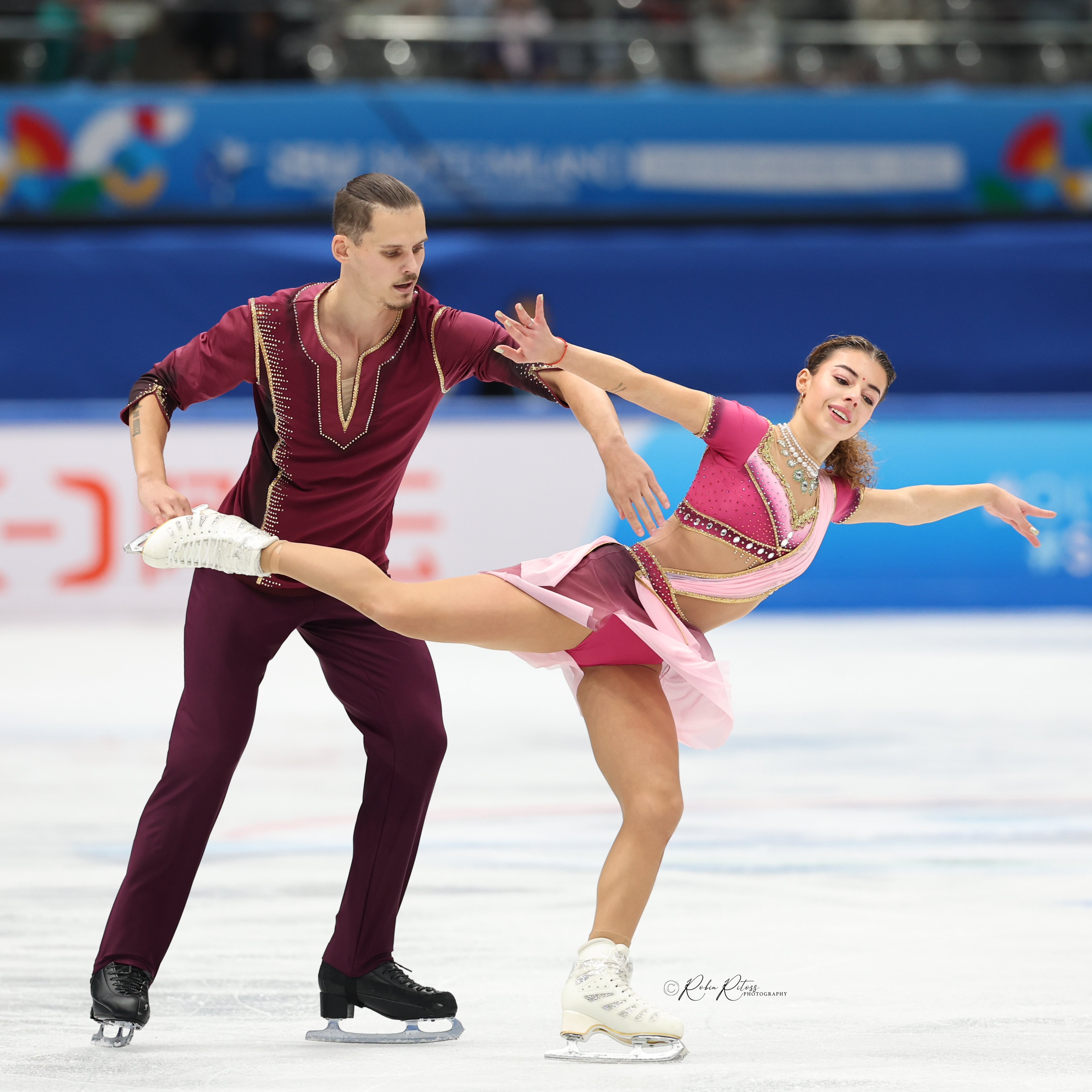
If the Olympic quota is the headline, the deeper story is what representation feels like to them now. “We fought for the transfer for a very long time, and the realisation that you now represent your ethnic homeland didn’t fully sink in right away,” Akopova explains. That understanding, she said, only truly settled after the Armenian Championships in December where they earned their first national title.
“In Beijing, I went onto the ice thinking: this is actually happening, we managed to do it,” she continues. “And now I need to prove that I’m not just a girl who represented Russia and switched to Armenia to make things easier.” Skating under the Armenian flag, Akopova adds, is closely tied also to a desire to contribute beyond her own results. “We want to be remembered as Armenian figure skaters and to help develop the sport in the country,” she says.
Akopova is studying Armenian seriously. “I didn’t know how to read or write,” she says. “Now I can almost do both. I haven’t learned the whole alphabet yet, but I’m getting there.” She works with a teacher based in Armenia, but the challenge is time and fatigue. “After intense physical training, it’s hard to give as much in class,” she says. “But I try my best.”
This season, the pair competed also at the ISU Challenger Series event Triatleti Trophy in Tbilisi, where they finished fourth. Their strong season’s best score also earned them a last-minute invitation to the ISU Grand Prix event Skate America in November, where they placed sixth.
Akopova and Rakhmanin were due to take part at their first ISU European Figure Skating Championships in Sheffield last month, their final competition before the Olympic Winter Games. However, delays in the processing of their UK visas forced them to withdraw, along with their teammate Semyon Daniliants in the men’s singles event. The withdrawal was a significant setback, not only because it denied them valuable competition experience so close to the Games, but also because it came at a moment when their form suggested a strong result was possible. Based on their season’s best score, the pair could realistically have targeted a top-five finish, which would have brought important ISU World Standing points as well as prize money.
Akopova and Rakhmanin are candid about the financial struggles they are facing. Winter sports are underfunded in Armenia, and the Armenian Figure Skating Federation has limited resources to support elite athletes. As a result, much of their preparation is sustained through the coaching work they undertake alongside their own training. “The savings we earned skating in shows during our quarantine were exhausted after our first competition. Travel to the United States was extremely expensive. The Federation supports us as much as they can, but we’re actively looking for sponsors,” she explains.
Akopova and Rakhmanin approach their first Olympic Games in optimal condition and with a positive outlook. Out of superstition, Karina knocks on wood, but added: “I used to have panic attacks even when I wasn’t in pain. But once I realised that I could skate almost clean even after a panic attack, like the one I had in Beijing, they stopped happening.”
After being given the honour of serving as Team Armenia’s flagbearers at the opening ceremony and testing the Olympic ice during the official practice session, the pair rejoined their training group at an off-site training camp. They returned to Milan ahead of the pairs competition, which begins with the Short Programme on 15 February and concludes with the Free Skating on 16 February. The pairs event at the XXV Winter Olympic Games features 19 teams, with only 16 advancing to the final.
 europeonice.com