
By Hiro Yoshida
In their eight year partnership Allison Reed and Saulius Ambrulevičius have had their fair share of highs and lows. As next year’s 2026 Milano Cortina Olympics approach, the team are locked in on their goal of securing a spot at next week’s World Championships in Boston to compete together on the biggest stage in the world.
More than a year later it is hard for anyone who was present in the Žalgirio Arena on the evening of 13 January 2024 not to get chills remembering the reception the audience gave Reed and Ambrulevičius as they skated their way to a European bronze medal. As soon as they knew the European Championships would be held in Kaunas, Lithuania, the duo tailored their preparations to be at their peak by the time the event came around.
“They had to hold Europeans earlier due to the availability of the arena,” Ambrulevičius said. “Our plan for the season beginning started very early. We were ready already to compete in August. We were in pretty good stead. It was very exciting to go and participate in Kaunas.”
As a Kaunas native, it was doubly special for Ambrulevičius to not only compete, but also to stand on the podium where he grew up and with his family and friends in the audience to support him and Reed. They feel it was the fulfilment of all the hard work they had put in over the course of the previous seasons.
“It was amazing,” he said. “One thing is to get a medal. It’s another thing to do it in front of your home people. I still relive that moment sometimes because it’s something that did happen. It’s not like I dreamt it. It was special and it was a very good example of what can happen if you just do what you believe in and what you dedicate yourself to. It wasn’t that we dedicated ourselves for the medal. We were dedicated to making ourselves better each time and it led to where we were contending. It wasn’t like it happened only for that year. We were going for it a year before when Europeans was in Finland too. We were going for the best that we could be and it placed us where we were top five at Europeans, top ten at Worlds the season before. We were there not just by accident.”
The team knew that they were going to get the loudest cheers from those in attendance, but even they were still blown away by the support they received.
“It was amazing that the turnout of people was that much, that there were so many people who came to watch,” Ambrulevičius said. “It was the first event ever in skating that was this big. The surprise of people coming to watch was a big one.”
Although none of Reed’s immediate family were able to attend Europeans last year, she has become close with Ambrulevičius’ family over the years of their partnership.
“Saul’s family have become my family,” she said. “I stay at their home every time that we go to Lithuania, and so they were my familiar faces in the crowd. His family actually got seats right above where we entered the ice. It was nice to see them there before we got on.”
This year’s Europeans in Tallinn, Estonia were inevitably a bit of a come down from the high of Kaunas. Ambrulevičius and Reed were fifth in the rhythm dance and seventh in the free dance to finish sixth overall. The team had a slightly delayed start to the season and were in any case expecting this season’s Europeans to be more a challenge.
“There’s ups and downs in everyone’s career, and I don’t think we consider this a down,” Reed said after the competition. “The next one’s only a few weeks away, so you have got to pick yourself back up and get your mind back in the game and back into the work. We just consider it a learning experience and another step towards our ultimate goal, which has always been the Olympic Games.”
“We knew that it was going to be a tough one, not only because of other people, but also because of how it was going for us this year,” Ambrulevičius said. “Injury caused our preparations to start late. It was a different season than the previous ones. Some people have six or seven competitions already before Europeans. It’s a build up from the first one of the season and what happened happened. But we are doing the best that we can, and we’re going to keep on going for the long game.
“We always take risks with our decisions for programmes and how they will stack up. Some years people love them. Sometimes people give more of a mixed reception. For us, it’s always a good thing, because it causes people to talk about it, rather than just be, ‘Oh yeah, we forgot about them.’ We’re happy that we still got people to come and watch and enjoy what we’re doing and we’re just going to build up from here.”
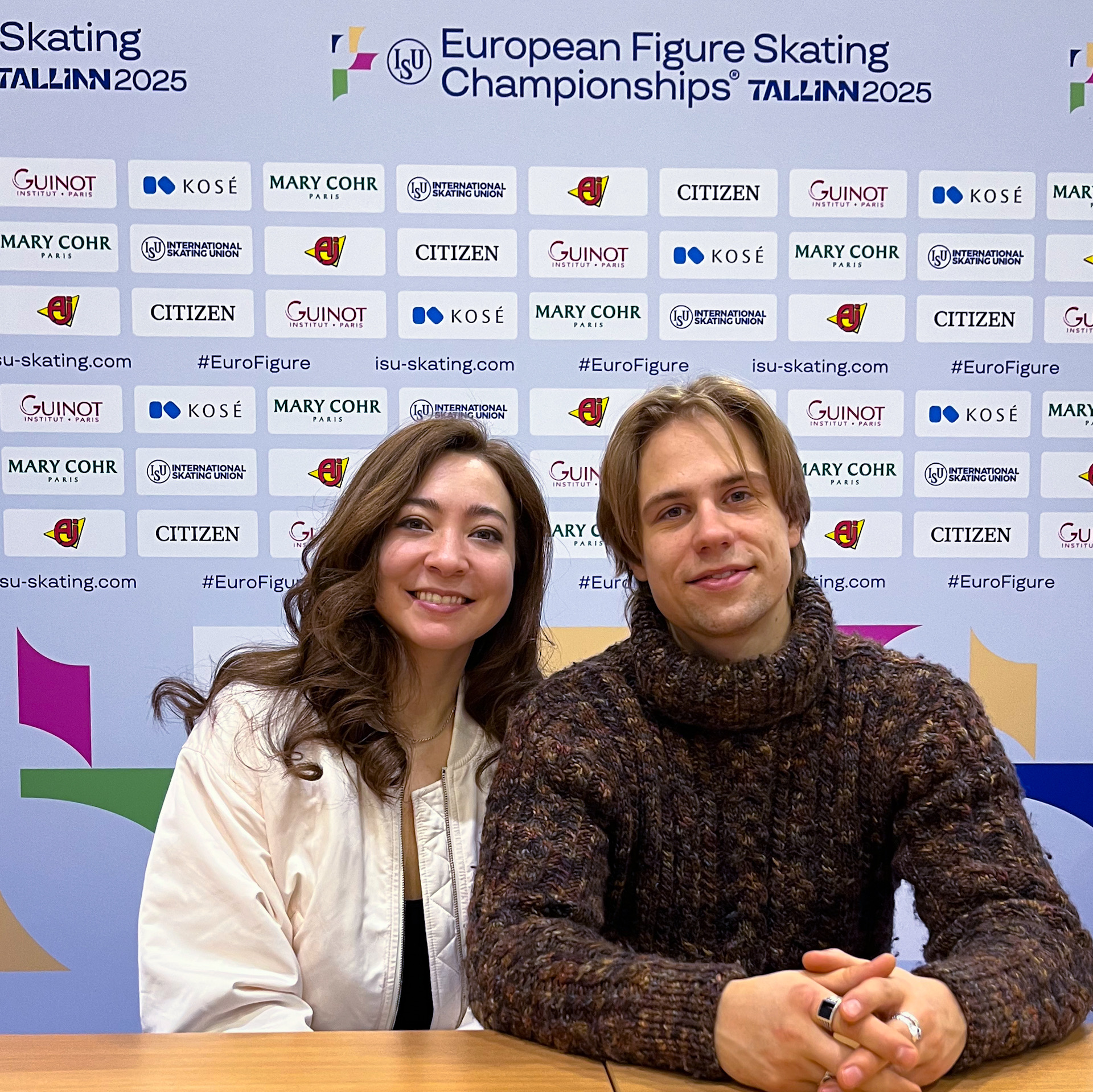
One thing that has definitely gone right for them this season was the announcement towards the end of November 2024 that Reed’s application for Lithuanian citizenship had been approved. Despite having achieved a spot for Lithuania at the 2022 Beijing Olympics, the team were unable to participate due to Reed not having Lithuanian citizenship at the time. By that stage they were based full-time at the Ice Academy of Montreal and they had mixed emotions seeing so many of the teams they trained with departing for the Olympics and having to stay behind.
“It was definitely a hard pill to swallow, but we knew,” Reed said. “We were happy for our friends. Everyone skated so well and when they all came back, we said, ‘Alright, let’s get ready for Worlds.’ We just kept moving forward and it brought us to this point.”
It was a case of third time lucky as Reed’s two previous citizenship applications had been denied. Rather than discouraging them, it provided them with motivation to improve their competitive ranking.
“The first two times they did decline and we just kept working,” Reed said. “We knew what the requirements were and what they required from us and from me, and so we just kept making those steps to make that happen. We focused on the things that we could control. What we could control was our skating, our careers, what we wanted from each competition and what we wanted from each season.”
Their efforts culminated in their bronze medal at last year’s Europeans. In light of the positive publicity surrounding their result, Ambrulevičius and Reed decided it was time to make another application.
“We knew that there was strong momentum for us,” Reed said. “We achieved something that hadn’t happened for Lithuanian skating in many years. We wanted to take control of that momentum and show we’ve done something really great. To use it and see if this time around, it will be enough. It definitely helped part of my application, but the other half was more to do with culture and language. That was the other work that I had to put in and I’m grateful for all of Saul’s help too because I really needed it. Through that and our Federation and Olympic Committee, it was definitely a mutual effort.”
“What was surprising was the reception after the achievements,” Ambrulevičius said. “After the last rejection when we continued to still skate and we were getting higher results each time placing ourselves in the top teams, people were starting to talk about it more loudly after each competition. ‘Why are you not giving her citizenship? She’s doing this not under some other country. She’s still skating for Lithuania after being rejected.’ After the medal, there was a commotion that was very surprising honestly seeing how the politicians started to react. They personally created almost a referendum when they started to collect signatures for her to have citizenship while we didn’t say anything. That momentum picked up and a lot of people were saying it’d be great if she had it.”
“It was definitely complicated,” Reed said. “The Lithuanian constitution doesn’t allow dual citizenship. For me, it was definitely an exception that the President granted that. But that’s why they have these exceptional routes for athletes or people that bring a lot of recognition to Lithuania. They do allow certain people that meet the requirements and I’m just glad that I was one of them.”
Reed and Ambrulevičius happened to be in Lithuania when they got the good news, appropriately enough during a practice session.
“The President (of Lithuania) wanted to speak with us one more time in Lithuania,” Ambrulevičius said. “We got to Lithuania and we had to continue training at the same time. After the meeting, we were skating. I came to get some water and I looked at my phone and it just blew up.”
“Skates on and everything,” Reed said. “I feel like it was meant to be. I wouldn’t have it any other way. It was nice to find out while we were at a rink training.”
The citizenship conferment ceremony on 17 December 2024 took place at the Lithuanian Embassy in Ottawa, Canada.
“It was unfortunate that we couldn’t do it in Lithuania, but we really needed time to train,” Reed said. “The Embassy in Ottawa was very happy to host us for my oath swearing. It was only the second time in history that they’ve done that there. It was intimate and cosy. We sat and had coffee after and talked for a bit. It was very nice. They were very accommodating and very sweet.”
The issues surrounding Reed’s citizenship being solved has been liberating for the team and allowed them to fully concentrate their energies on competing.
“It’s definitely a weight off both of our shoulders to be able to just solely focus on the skating,” Reed said. “I think that’s what made this first half of the season a bit hard was that there was a lot going on outside the skating and the compounding factors were more than what we were used to. Knowing that this has been accomplished and we can hunker down train, work, focus on the skating and make that our top priority. We’re looking forward to doing that.”
Ambrulevičius was resigned to not participating in the Olympics ever and is still not taking it for granted while there is still a job to be done to qualify a spot.
“The first time when we applied I was very sceptical about if we’re going to do it because of the past history that the country had with citizenships,” he said. “I never thought that I will be in the Olympics. I almost accepted to just squeeze everything that I can from moments like Europeans and Worlds and other competitions. When I step on the ice in that competition, I’ll know I’m there. Until that happens, I’m still looking to each moment to make the max out of it.”
Reed has already been to the Olympics. In 2010, she represented Georgia at the Vancouver Olympics. It was a special Games as her sister Cathy Reed and brother Chris Reed also participated skating for Japan.
“I look back and I was very young,” Reed said. “I was fifteen, so it was a very long time ago, but it was a wonderful experience. Not only because I was so young, but also because I was able to do it with my family. It was a whole family affair and to be able to share the Olympic ice with my siblings that was my fondest memory. I’m very grateful for that experience and to have been there with them.”
Five years ago this month tragedy struck the Reed family. On 14 March 2020 Reed’s brother Chris suffered cardiac arrest and died. It was a painful time for the close-knit family made even more difficult as it occurred when the Covid-19 pandemic travel and in person assembly restrictions were being implemented. The passing of time has not diminished the loss Reed and her family feel. Poignantly Reed carries a photo of her brother in her team jacket.
“It’s incredibly difficult, and definitely I would not be here today if it wasn’t for Saul,” Reed said. “He was my rock and my anchor through that. It’s always tough, but Chris is always here. He’s always watching and I know he’s proud. I wouldn’t be here without the support that I had from Saul, and really the skating it helps. It helps.”
The funeral took place on 21 March 2020 and was live streamed for those unable to attend in person. The inclusion of everyone who wanted to pay their respects was something that the Reeds felt strongly about and keeping his legacy alive.
“We understood that people couldn’t be there physically and we’re grateful for the ones that were,” Reed said about her brother’s funeral. “We knew that was something that we wanted to do, to include everyone that loved him. It was beautiful, magical. I think we feel that every time that we get to compete in Japan, that love, that support. It seeps from the Japanese crowd and the Japanese Federation are always so sweet to us and sweet to me. My sister is still over there in Japan with her teams and I’m so proud of her for continuing that, knowing that she wanted to do that with Chris. The fact that she is still there, still going and very successful, I’m just so proud of her.”
Whenever they are assigned to a competition in Japan, Reed uses the opportunity to spend quality time with her sister who currently resides in Kyoto.
“After Worlds in Saitama, we decided to stay an extra week with another skater that we trained with,” Reed said. “My sister invited us all to her apartment. We all crowded in there and then she took us on a tour of Kyoto for the week.”
The sisters will see each at the World Championships where Cathy will be coaching Japanese ice dance champions Utana Yoshida and Masaya Morita.
“She’s a champ,” Ambrulevičius said. “I think Japan should be happy having a person like her being a part of developing athletes that she’s done. Her team has so much potential and they have a big chance of being in the Olympics.”
Reed and Ambrulevičius have been training at the Ice Academy of Montreal since 2021 and are happy with their decision to move there both from a professional and personal point of view.
“I think Montreal is making us change into different people, in ways that we were not expecting,” Ambrulevičius said. “The growth we both as individuals are getting is something that I don’t think we would have gotten in any other place and we’ve trained in many different areas. I think what Montreal does is open people to the cultural aspect outside of skating, where you can implement it into your own journey, in your careers. It’s not even skating, but it’s the diversity, the inclusivity of different people. If you accept it, you can flourish.”
“Montreal has treated us so well,” Reed concurred. “It’s definitely a cultural hot pot kind of a city. When we lived in Europe for a few years, I missed it when we went back to North America and then to find a city that has that flare of European in it. Quebec being a French-speaking province and having that little touch of Europe gives me comfort. The culture of the city is so great and I think it really adds spice to life.”
The coaching environment has allowed the Lithuanians to bloom as they practice with many of the teams who they compete against during the season.
“One of the great things about IAM is they breed a culture of camaraderie,” Reed said. “It’s a family and they really emphasise that. They don’t try and push one team over another. They only push everyone as much as they want to. It’s what you want from your career and how much you’re willing to put into it.”
“The school is a very good platform for individuals to understand what power they have,” Ambrulevičius said. “They allow you to take control over your career, but they will be there for you to give the tools that you need, get the support, get the guidance. It’s all down to each team. I think it helps us to get that individual strength and develop as athletes. When you understand your strengths and you understand independence, you become independent and strong in that.”
The goal for the upcoming World Championships is naturally to qualify an Olympic spot. Beyond that personal satisfaction with how they have skated is key for Reed and Ambrulevičius.
“I think the goal for us at every competition is just to show our best,” Reed said. “We go in there wanting to leave the ice knowing that we put everything out there, left nothing to be desired, no doubts about anything, and just really proud of both our performances. It’s never a number or a placement or whatever. We hope to do that at Worlds and, of course, get a spot for the Olympics. A big aspect of why we choose the music we choose, why we create stories for our programmes is to leave a lasting impression on the audience that gets to come and watch us. We always hope that that’s the case when we exit the ice.”
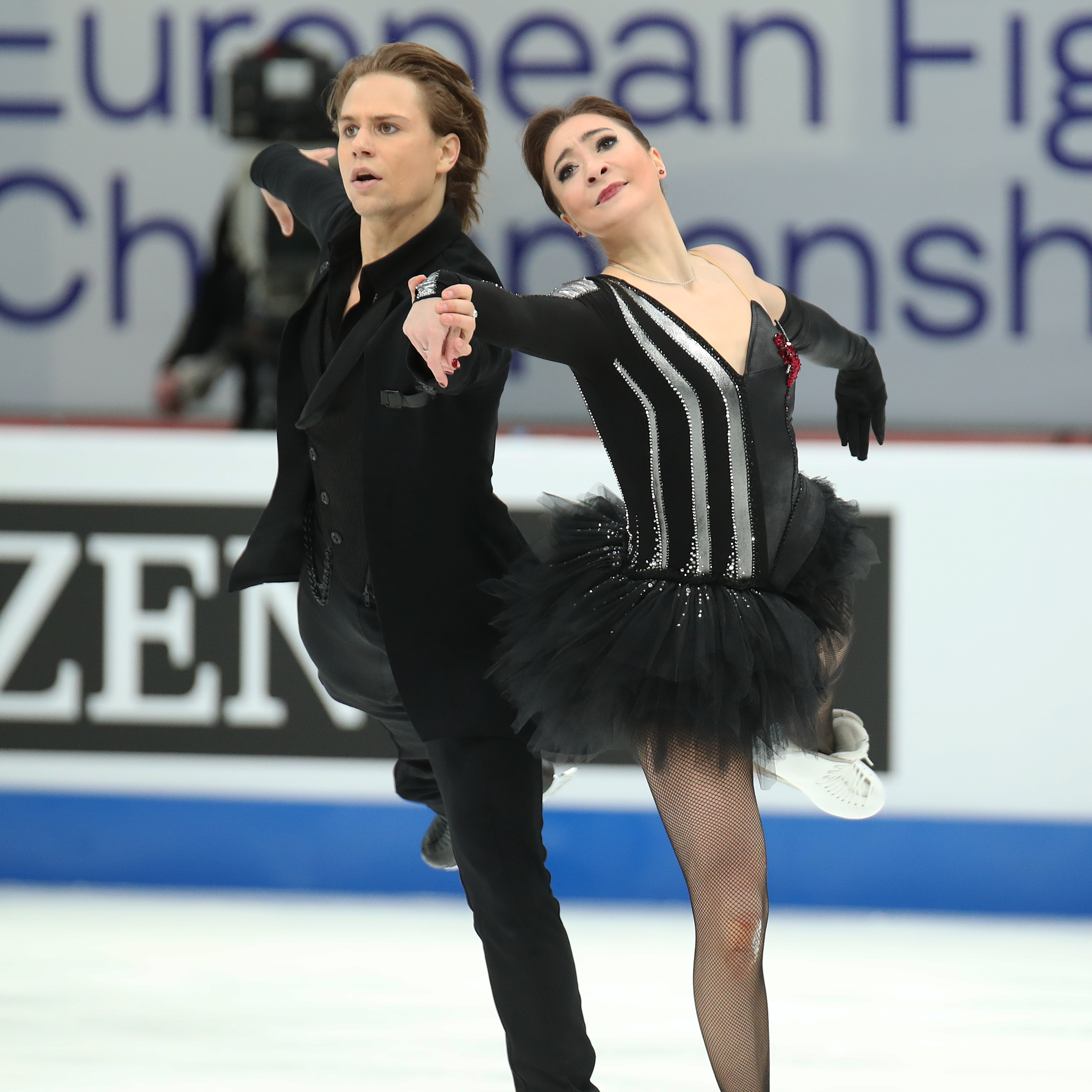
Following the World Championships, Reed and Ambrulevičius will sit down and decide on what they want to skate to for the Olympic season. They believe it is important to be creative and try styles they may not have done before and finding something that also works for them.
“It’s always a bit of a challenge when push comes to shove,” Ambrulevičius said. “We never want to choose something that other people have done, which makes it harder. You want to explore not only yourself, but explore your capabilities, trying a different genre, a different style of skating. We’ve done so many different styles of programmes in the past few years that I don’t know. We’ll see. It’s what do you feel comfortable doing.”
“The artists that we chose for this year, we were playing around with last year and it just wasn’t happening for us,” Reed said. “We just weren’t ready for that genre or that artist yet. It’s always a really fun journey, looking for music, trying to find a story, find what style is going to be best for us.”
Beyond 2026 their plans are up in the air. Kaunas has submitted bids to host either the 2027 or 2028 World Championships, as well as the 2028 European Championships. The lure of another home event would be a temptation to stick around competing for a few more seasons.
“If they would get it, then we’ll consider it,” Ambrulevičius said. “It would be a first Worlds and it would be insane. I know now that if that would come to fruition, Kaunas would host full out. A lot of countries will be jealous again.”
Reed and Ambrulevičius have come a long way separately and as a team since they first encountered each other back in 2014 when Ambrulevičius was embarking on his career in ice dance and training with Reed’s siblings.
“When we met my first year I was doing ice dance for three months, so I sucked and now look where we are,” Ambrulevičius said.
“When I first saw him I thought, ‘He needs some work,’ Reed laughed. “Look at us now. It’s crazy.”
More than any of their accolades, Reed and Ambrulevičius value the friendship they have gained through forming their competitive partnership.
“He’s my best friend and he’s been part of my family for years now,” Reed said. “When we started, when we were just skating together for fun, it had nothing to do with the skating. It had to do with the fact that we enjoyed each other’s company. We really clicked both on and off the ice. What really contributed to the length and the success of our career was the fact that we are friends off the ice as well as on.”
“There were a lot of those bumps that you get in life and it’s not what you achieve as a team,” Ambrulevičius said. “You can hate each other’s guts and you can achieve stuff, but that was never the case for us. It’s the support that you give each other as a person throughout the bumps. That’s what made it more special and you started to see each other more than just a business partner, started to see more as a friend and it carried us through. I think it gives that part of our connection that we get on the ice. Once you harness it, that’s what gives the strength and performance.”
 europeonice.com