
By Hiro Yoshida
This season saw Matteo Rizzo make a gradual return to competition after major surgery just over a year ago. While he sits out this month’s World Championships, he still has his sights firmly set on a home Olympics in 2026.
After a late start to his season due to rehabilitation, in January Rizzo was back at the European Championships in Tallinn, Estonia seeking a third consecutive podium finish at the event. Despite an error on a triple Axel in the short programme, the Italian was in fourth place going into the free skating just three tenths of a point off a medal. However, a number of errors in the free saw him drop to fifth overall. It was not the result he wanted but, given how this time last year he was not sure he would be competing again, he was not too downhearted.
“I was expecting a lot from this European Championship because I was working very hard,” he said. “The mistake on the triple Axel in the short cost me a lot, but still I was there. I think next time we will need to work more on quality for everything to not lose any points. The free just didn’t go well. I was trying to fight through everything. I didn’t give up, so that’s a good point. Bringing home fifth place I think is a result that I can be proud of.”
Back in late 2023, Rizzo found himself at a crossroads. A severe hip injury potentially threatened to prematurely end his career. He took the decision to have major surgery in late January 2024. The 2024 European Championships was his last competition before the surgery and he approached that event without any expectations.
“I won a medal and it was unexpected there, because it was completely the opposite from this year,” Rizzo recalled. “I was forced to stop skating already in the beginning of December, so I was not ready for the European Championship. I just wanted to be there. I was happy to be there, but I knew that I was not in the best shape. In the free skating, I fell on the last triple Axel, but all the rest of the elements were clean. I was very tired. It was completely different. Then the medal happened because other skaters made bigger mistakes than me. My emotions were crazy because I didn’t expect to be there. Going back home with a medal was amazing. It’s such a big difference from this year’s European Championships.”
After the conclusion of last year’s Europeans, Rizzo went under the knife on 22 January 2024.
“For the hip surgery, they fixed the head of the femoral bone, which had a crack. Then they fixed the acetabular labrum, which is the soft part that covers the hip bone that was all broken. They shaped the neck of the femoral bone again, because I had an extra part. They had to cut the bone. It was a two and a half hour surgery. The doctor told me is that the hip is a big joint, so that’s why you need to be careful about the rehabilitation.”
There was no guarantee that Rizzo would be able to compete again after the surgery. In fact, he received advice he should prepare to retire.
“One of the doctors actually told me it’s better to stop doing sport at a high level because they were not sure that I would be able to come back,” he said. “But then the doctor that did the surgery on me said, ‘You can be back. You just need to be patient. It’s going to take a long time to recover, but then I’m sure you’re going to go back.’ So, we believed him. After the European Championships, we did the surgery. Everything went well. But six to eight months to recover, it’s quite a long time and you never know if you can come back or not. I was not feeling confident, but my team was supporting me and my family too.”
After his surgery, Rizzo began his journey to regaining full fitness. Due to the nature of the injury and the surgery, it necessitated a cautious and considered approach in order to fully heal.
“I was hospitalised just for three days, and then I went home for five weeks without doing any rehabilitation,” he explained. “From the beginning of March, I started the rehabilitation until late April. When I went back on the ice, I could not jump or even do turns for I would say three or four weeks. After I took off the crutches, I remember walking was hard because I was not extending the hip. I was stumbling. The physio was always telling me to be careful and to walk correctly, but I could not. I remember also when I started running again, I was very careful because I didn’t know if the hip was okay or not. It was a tough period, but the process was good.”
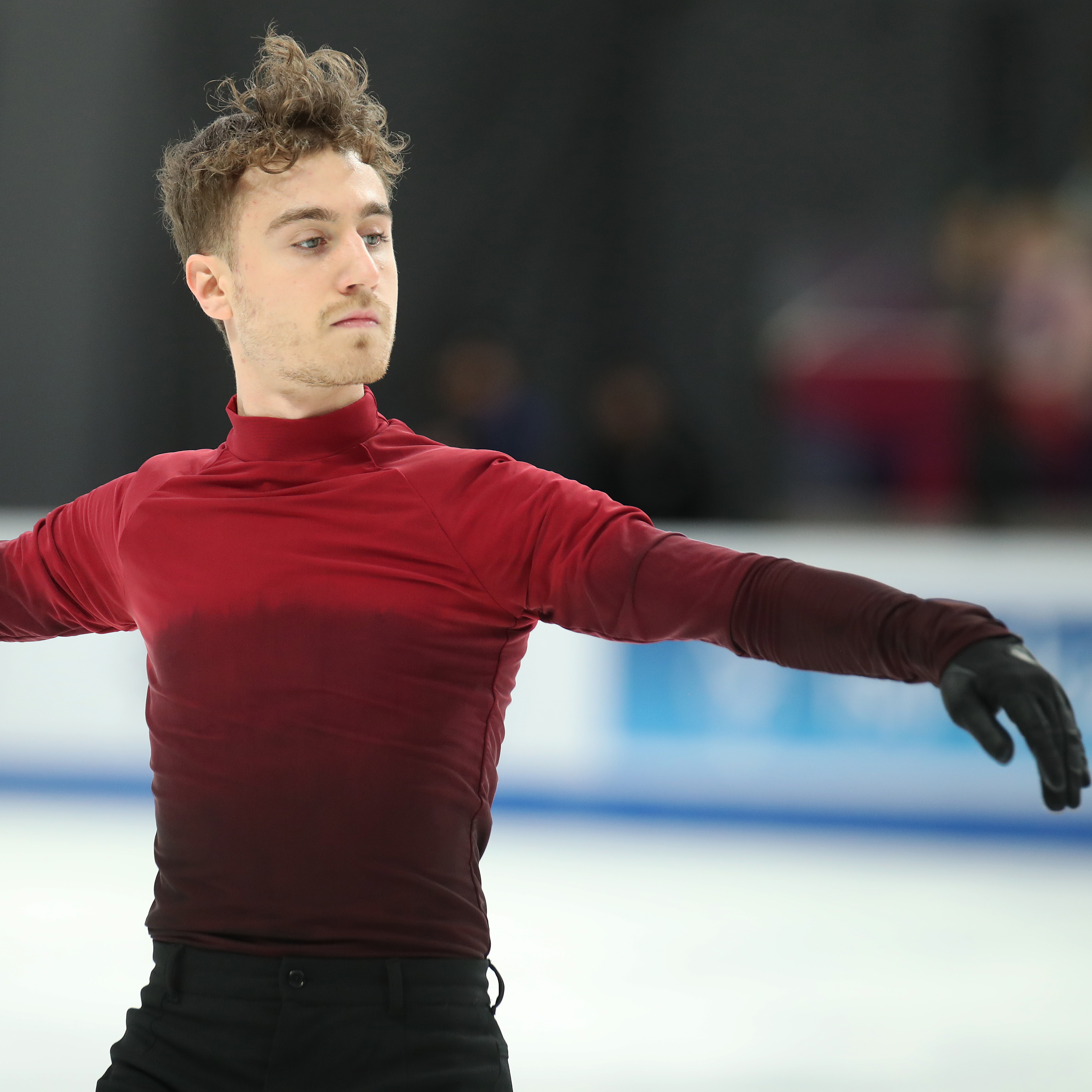
Rizzo’s comeback event was Budapest Trophy which he won. He had already received two Grand Prix assignments in Japan and China. Despite not having regained a full technical arsenal, he chose to compete in both. With a week in between the events, he trained at the Kinoshita Academy in Kyoto to avoid lengthy travel back and forth to Europe.
“After Budapest was the moment where I realised I might be able go back again, but I knew it was not before the European Championships that I could go one hundred percent because I needed more time.
“When you go back from such an injury, of course, you can think about the future, but then your body decides if that’s the correct time or not. I was practicing very hard, but I was feeling that I was not in one hundred percent shape. I was struggling to do one quad. I was not doing toe loop, which is the easiest quad for me.”
Rizzo was fifth at both NHK Trophy and Cup of China. He attempted quadruple loop at both events rather than quadruple toe loop.
“I really could not turn for quad toe,” he explained. “After the surgery, the abductor muscle on the right hip was shorter, about one centimetre shorter than before, and it’s the main muscle to do quad toe. That’s why I was doing just the loop in the first part of the season, and that took away a lot of points because loop is more complicated. And of course, doing just one quad in the free and not two or even three, it’s less points. In the second half of the season, I will try to go back with to the two quads configuration in the short and maybe three in the free. I think I will do two toe loops and one loop in the free. I will try. But the main goal will be for next season, for the Olympic season, to be in the best shape I can.”
Following Europeans, Rizzo won the Bellu Memorial in Bucharest, Romania in late February and came second at the Sonia Henie Trophy in Oslo, Norway earlier this month to close out the season. He now turns his attention to next season with the potential for a third trip to the Olympics and one in his hometown no less. He will be cheering on his compatriots Nikolaj Memola and Daniel Grassl as they strive to secure spots for those Milano Cortina Games.
“I wish them all the best because it’s going to be a very important moment for Italy to try to get two or three spots for the Olympics.”
Rizzo is leaning towards keeping his free skating programme to “Miserere” by Zucchero featuring Luciano Pavarotti for next season.
“I think everybody loves it. Unfortunately, in competition, I didn’t skate it well, but still, I think this is a programme that can give emotions, and this is what I’m always looking for.”
If Rizzo does make it to the 2026 Olympics, he will be part of a formidable Italian squad that aspires for more than just individual medals.
“The team event is going to be a big deal because Italy is pushing very hard,” he said. “We are fighting for a medal. I can say that we are building up a very strong team. We can fight for the medal, and the most important thing will be the team event in our figure skating competitions.”
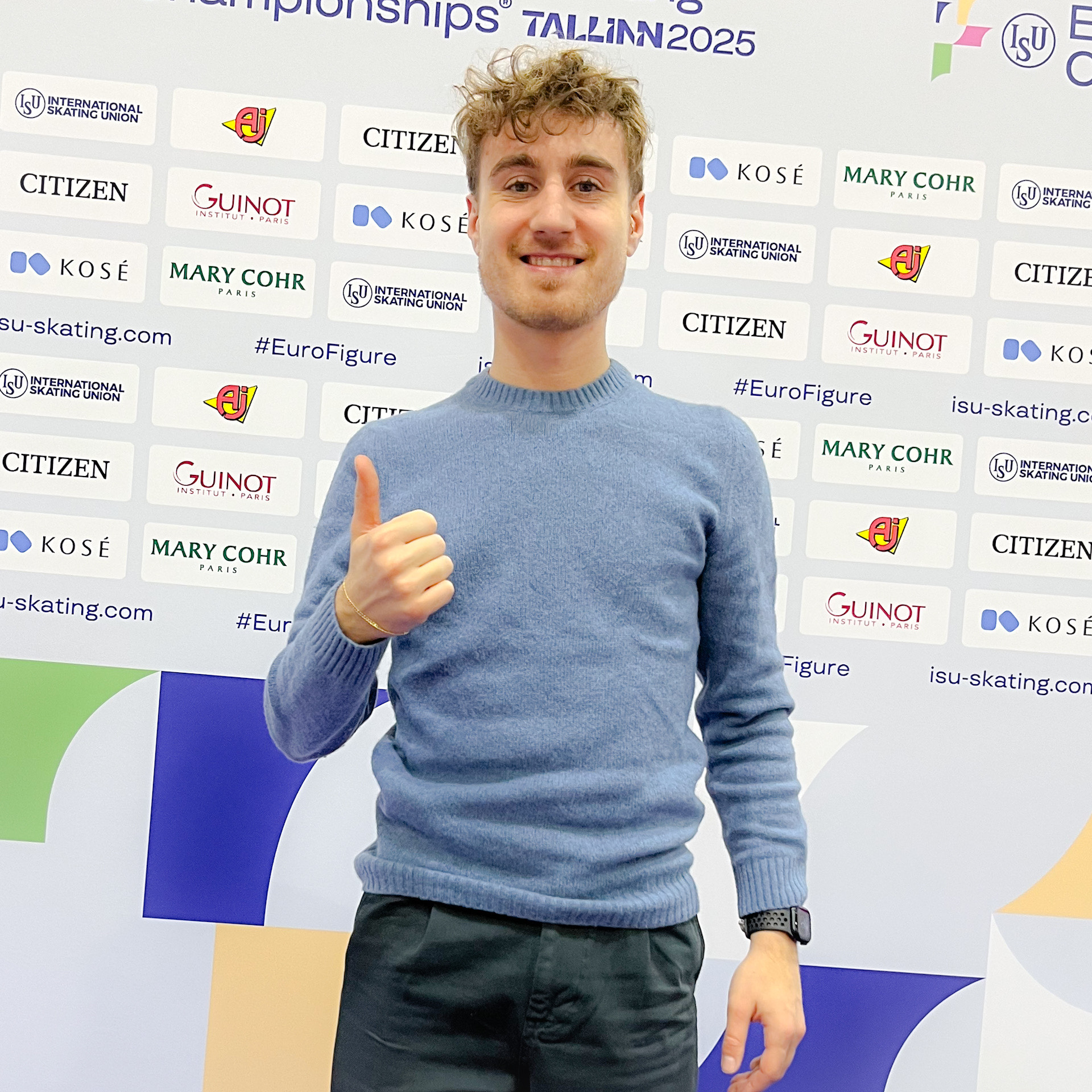
Rizzo was just nineteen years old when he competed at the 2018 PyeongChang Olympics. Although still a relatively youthful twenty seven, he relishes his position as one of the elder statesmen of the Italian team.
“It’s been more than ten years that I’ve been competing in senior events. I’s quite unusual for me to be the veteran, and I feel still very young. I’ve always been the youngest one on the team up until a few years ago. Now I appear to be one of the oldest, but it’s nice. You understand the career you had was long, so it is very important to pass the experience you get in your career to the younger athletes. I always try to give them advice to compete as best as they can.”
Rizzo’s first two Olympic experiences were quite a contrast and the last one in Beijing with all the Covid-19 restrictions has him eager to try to get back to participate in a less restrictive Games in 2026 and make a mark.
“It was a difficult Olympic Games, different than usual, and I guess it didn’t really feel like an Olympic Games,” he said “The people that were in the stadium were just skaters and coaches from the other nations, and volunteers that might be watching the competition. It was very hard, but then it’s an Olympic Games, so you want to participate. You want to do it for yourself, for your team, for your nation. The experience I had in Pyeongchang was completely different, and I still feel the emotion on my skin. It was amazing, the audience, the atmosphere. That’s the Olympic Games atmosphere I will look for at the Milano Cortina Olympics. It will be in Milano, my hometown. I will do really my best to be there, and not only to be there, but if I’m there, it’s because I want to be there to reach something very important.”
 europeonice.com
One comment